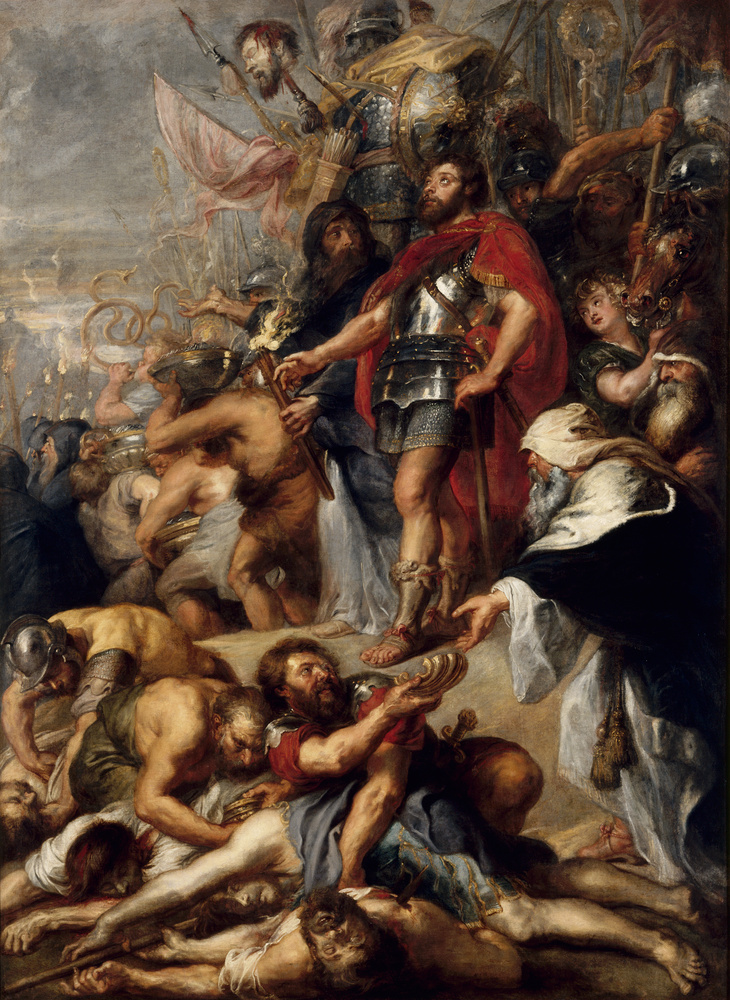
Peter Paul Rubens and workshop · PD
The Triumph of Judas Maccabeus
Details
The story
At first glance this is a victory parade, all horses, armour and captured gold, painted by Rubens around 1635 with his usual Baroque force. Its real subject is quieter: praying for the dead. The scene comes from the second book of Maccabees. After a battle, the Jewish commander Judas Maccabeus gathers silver to send to Jerusalem as an offering for his fallen soldiers, so that they might be freed from sin. In Rubens's day that passage mattered enormously. Catholics used it to defend the idea of purgatory, which Protestants rejected, so this triumph was really an argument about doctrine. It was made for the bishop of Tournai, Maximilien Vilain, for the altar of the Souls of Purgatory in Tournai Cathedral, paid for by the townspeople. In 1794 French troops took it from Tournai, and it was sent to Nantes, where it still hangs. Tournai has since asked for it back.