Peter Paul Rubens · PD
Triumphal Chariot of Kallo
Details
The story
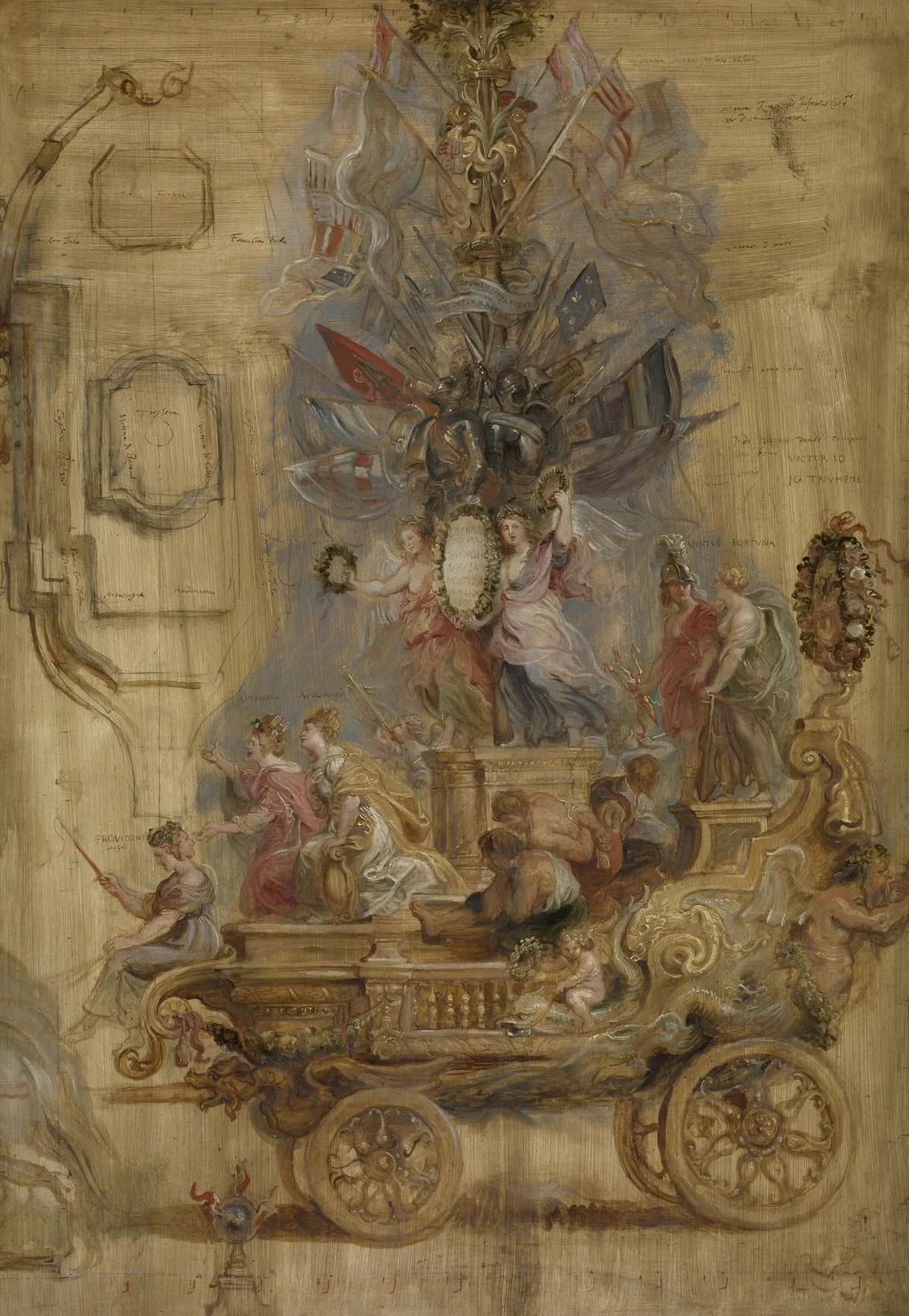
On 20 June 1638, a Dutch army was closing in on Antwerp, meaning to encircle the city, when a smaller Spanish force under the Cardinal-Infante Ferdinand turned it back near the river fort of Kallo. It was the worst defeat the Dutch suffered in the long war for the Netherlands, and Antwerp, which had felt the noose tightening, threw a celebration. For its yearly procession the city council asked Rubens to design a triumphal float, and this is his plan for it, painted in oil. It is a working document as much as a picture. Rubens lays out the wagon piled with captured flags and trophies, a laurel tree of victory rising from the middle, and figures personifying Antwerp and the provinces, and he even sketches the cart's ground plan so the carpenters could build it. He was 61 and had two years left to live. The engraver Theodoor van Thulden later turned the design into a print that carried the victory across Europe.