Claude Monet · CC-BY-SA-4.0
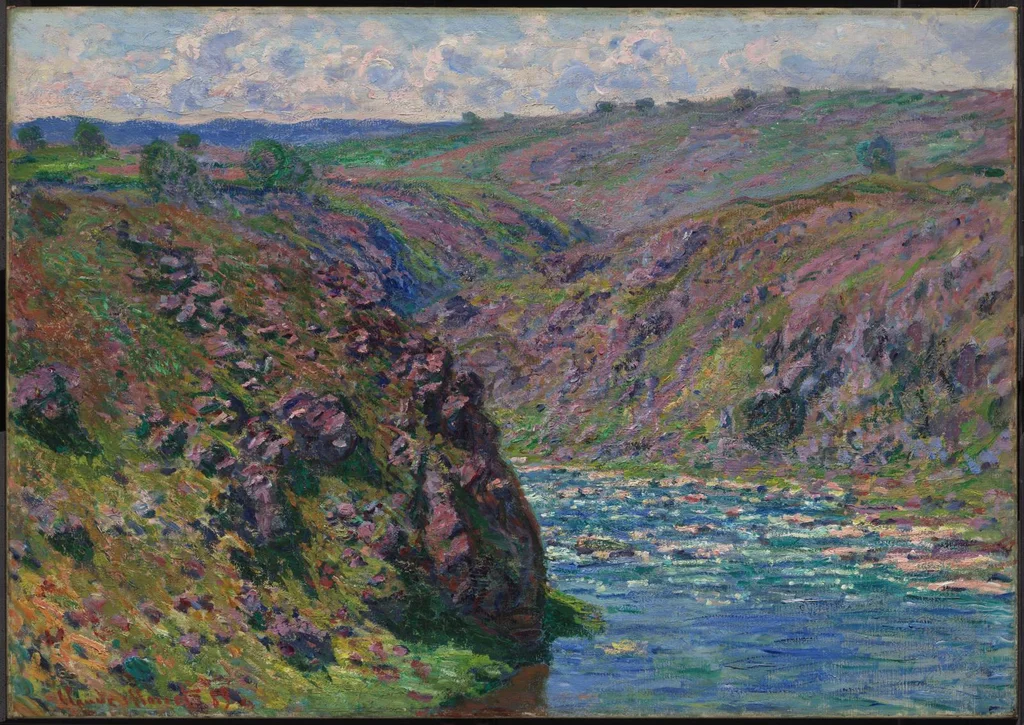
Valley of the Creuse (Sunlight Effect)
Details
The story
Below the village of Fresselines in central France, the Petite Creuse and the Grande Creuse run together, and the spot has a name of its own, les Eaux Semblantes, the waters that look alike. Monet painted that meeting of the rivers about ten times in the spring of 1889, and this is the view under the midday sun. The Museum of Fine Arts describes how the strong light throws every cranny and outcrop of rock into relief, and how the river below glitters with thick strokes of white. On 20 June 1889 Monet sold the canvas to the Paris dealers Boussod, Valadon and Company, who entered it in their stock book under that same name, Les eaux semblantes. By 1891 it was in America, and it spent the next three decades in New York. In February 1924 Grace Edwards of Boston bought it, probably for her brother Robert. Robert, Hannah and Grace Edwards each collected, and they seem to have owned their pictures jointly. Robert died later that year and left his collection to the Museum of Fine Arts in memory of their mother, Juliana Cheney Edwards, and this canvas came in with it in 1925.