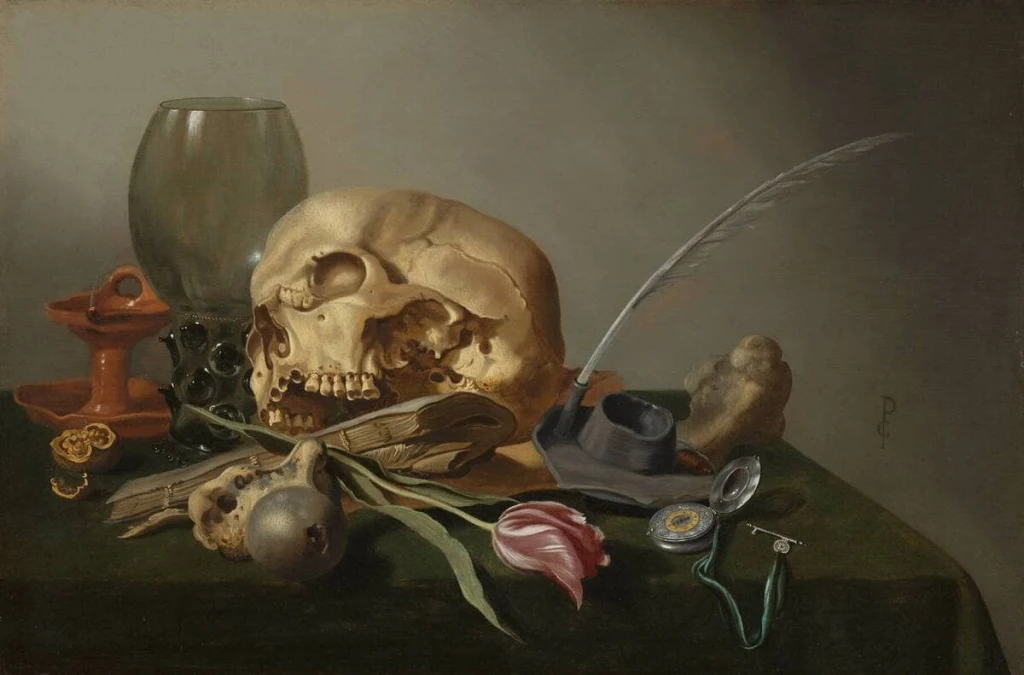
Vanitas Still Life
Details
The story
By the mid-1630s the Dutch town of Haarlem, where Pieter Claesz worked, sat at the centre of a boom in the tulip trade. Prices for a single rare bulb were climbing toward the frenzy of the winter of 1636, when one could be swapped for the price of a house. That helps explain the flower resting on this table, because it is a tulip. Claesz laid it beside a skull, a tall drinking glass known as a rummer, and a small watch. Skull and glass and watch were the familiar signs that life and time run out. The tulip made the warning local and sharp: the most desirable, most expensive thing money could buy in that town was also among the first to wilt. He kept to his narrow range of greys and browns, so the bone of the skull and the curve of the glass hold most of the light. The watch is the kind of costly new instrument a Haarlem merchant of the day might actually have carried.
More works by Pieter Claesz
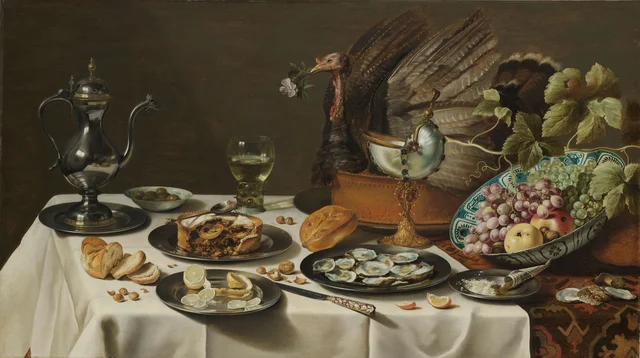 Still Life with a Turkey PiePieter Claesz, 1627
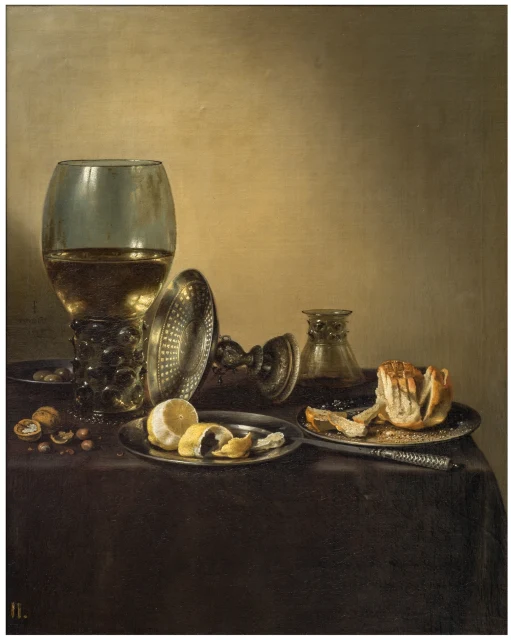 Still Life with a Roemer, a Silver Tazza and a Bread RollPieter Claesz, 1637
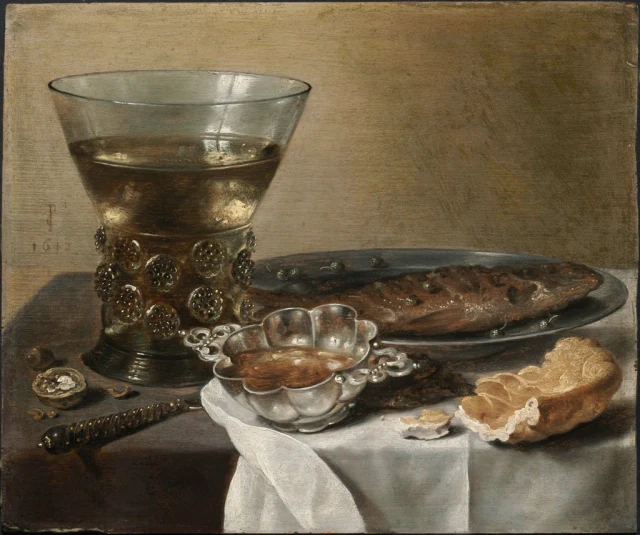 Still Life with Silver Brandy Bowl, Wine Glass, Herring, and BreadPieter Claesz, 1642
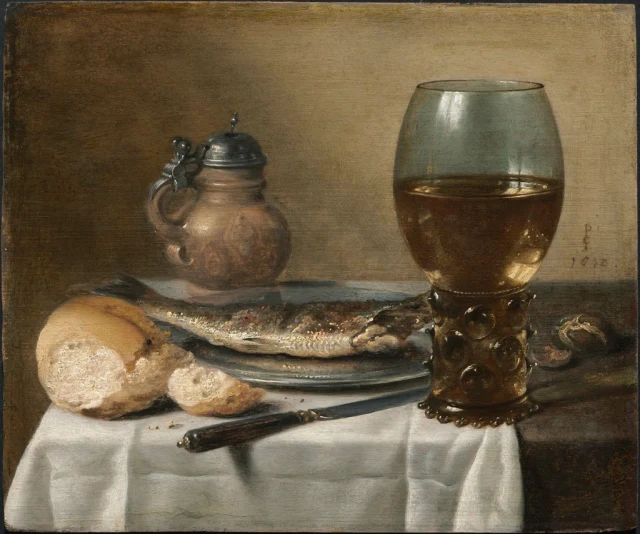 Still Life with Stoneware Jug, Wine Glass, Herring, and BreadPieter Claesz, 1642