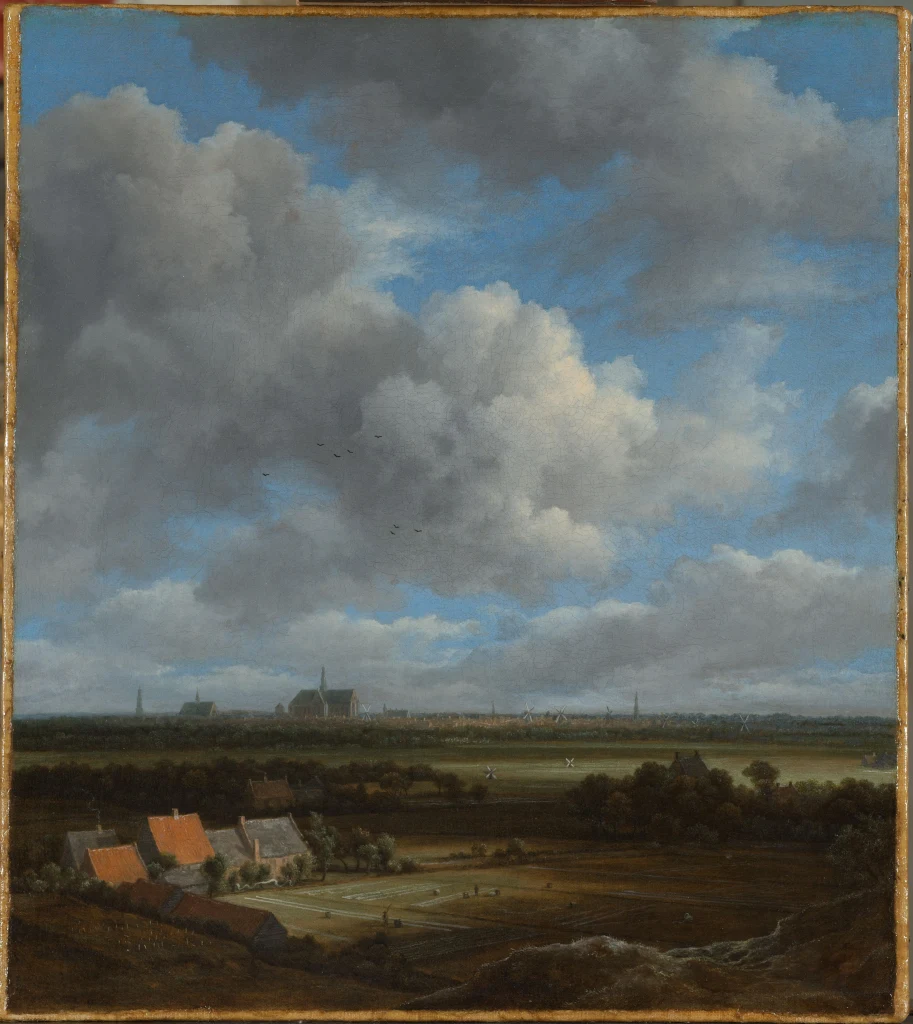
View of Haarlem from the Northwest, with the Bleaching Fields in the Foreground
Details
The story
In 17th-century Dutch inventories a picture like this had its own nickname, a Haarlempje, a little Haarlem. Jacob van Ruisdael painted a whole run of them, looking toward his home town from the dunes, and this one is small, just 43 centimetres tall. He gives most of it to the sky. The city itself is a thin band on the horizon, recognisable by the long, high roof of St Bavo's church, with windmills strung along the skyline. Below, beside the red-roofed farm buildings, long white strips lie on the grass. That is linen, spread out to bleach in the sun. The bleaching works sat at the foot of the dunes for a practical reason, the pure water that seeped through the sand. The museum dates the picture only broadly, to sometime between about 1650 and Ruisdael's death in 1682.