Jan Brueghel the Elder · PD
Village Kermis
Details
The story
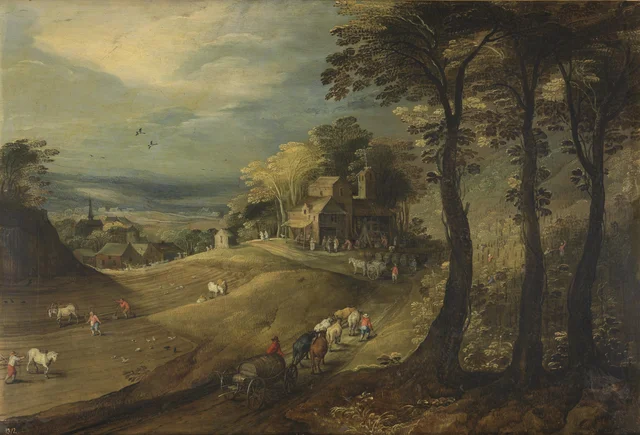
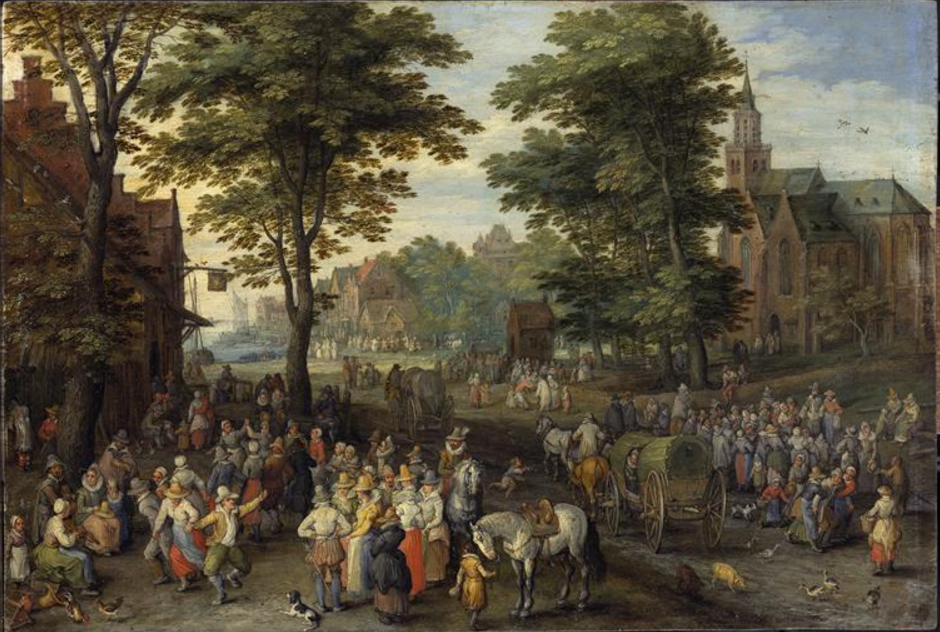
A kermis was the yearly festival of a village parish, the feast of its church, and the authorities had worried about it for generations. As early as 1531 the emperor Charles the Fifth tried to limit how many such fairs could be held and how long they lasted, because of the drunkenness that came with them. Older Flemish pictures of the subject tended to dwell on exactly those excesses. This copper plate, painted in 1612, leaves them out. The Alte Pinakothek explains the change by its buyers. Following the model of antiquity, the upper classes had taken an interest in peasant life, the country existence that Roman poets such as Virgil and Horace had praised, and they wanted to see the cheerful, entertaining side of a village feast. The plate is about 22 by 34 centimetres, and its frame was probably made in the Netherlands in the middle decades of the 17th century.