Claude Monet · PD
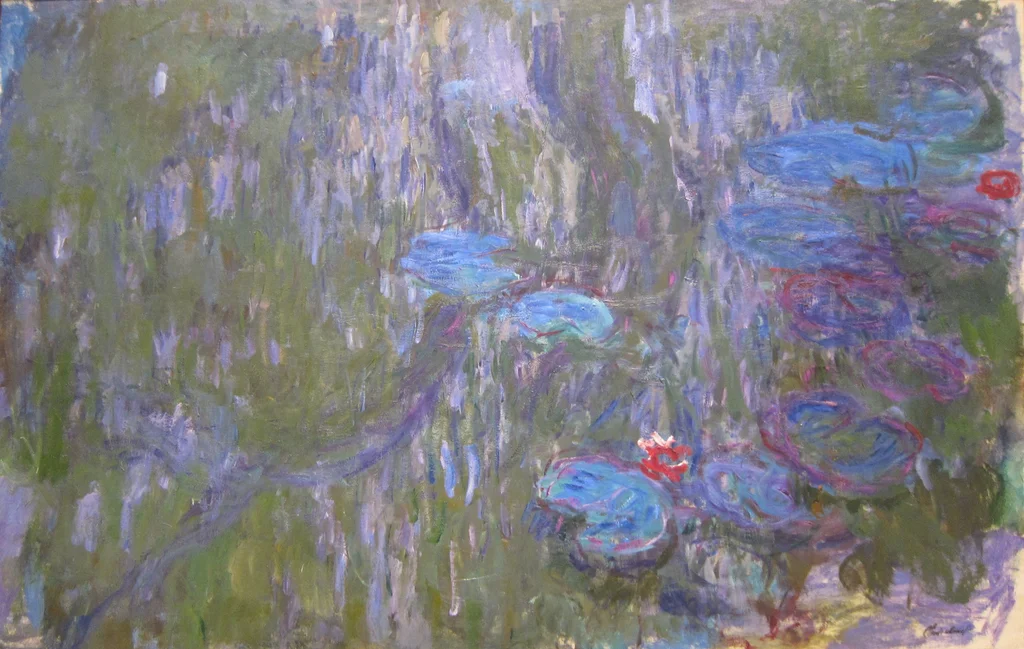
Water Lilies, Reflections of Weeping Willows
Details
The story
The weeping willows came into Monet's pond pictures during the First World War. He was in his late seventies and had refused to leave Giverny when others were going, writing that if he was to be killed it would be among his own canvases. His son and his stepson were both at the front. In France the willow was a long-standing emblem of mourning, and the willow paintings he began around 1918 are read as his answer to the war dead. The title here points at the water: the tree enters the picture as a reflection across the surface. The canvas is two metres wide, painted in the studio he put up in the garden in 1916 to hold the enormous water-landscape panels.