William Chafyn Grove (1731–1793)
Details
The story
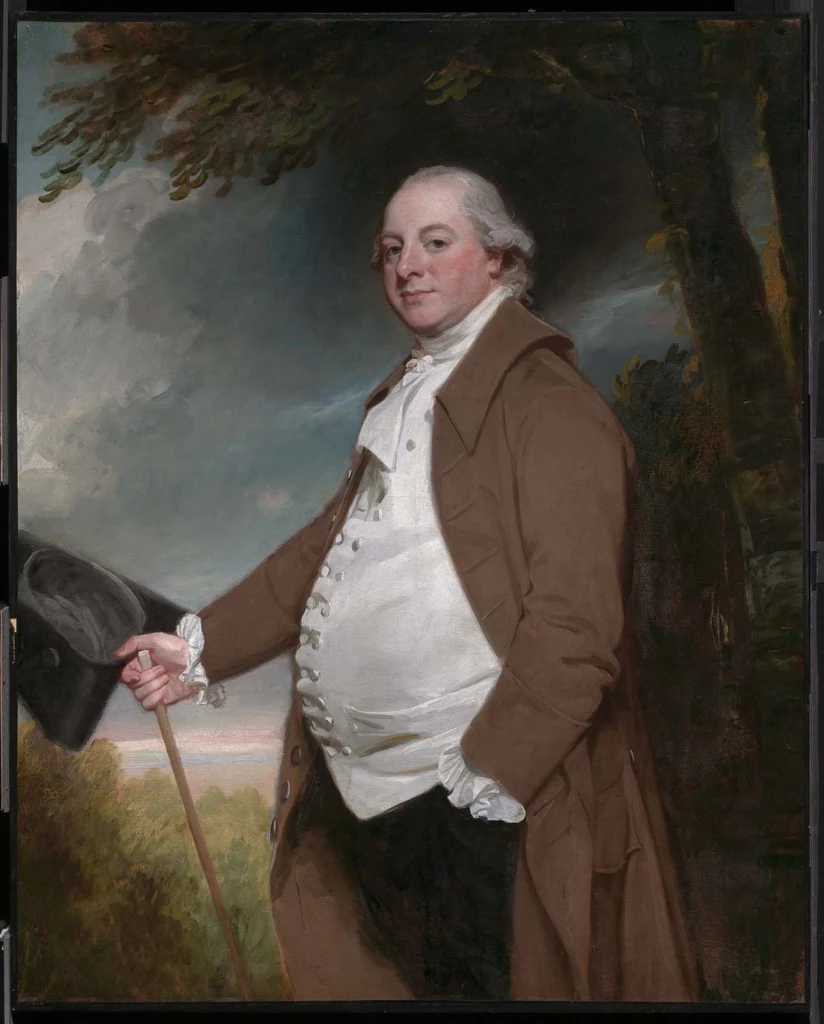
William Chafyn Grove was a Wiltshire lawyer who never became famous. He entered the Middle Temple in London in 1750, was called to the bar six years later, and sat in Parliament first for Shaftesbury and then for Weymouth and Melcombe Regis. In 1776 he married his cousin Elizabeth Grove. When Romney painted him, in 1779 or 1780, he was in his late 40s, and the museum describes the portrait as giving him an air of solid respectability and social comfort.
The canvas went home to Zeals House, the family seat in Wiltshire, and it stayed there for the next 150 years. Grove died in 1793 and the couple had no children, so the house and the portrait passed to his widow, then down through other Groves, then to a sister. In 1891 they went to a relative, George Bullock, who had already added Troyte to his name under the will of a clergyman relative and in 1892 replaced Bullock with Chafyn-Grove. Each new name came with the same picture on the wall.
His successor, Edward Troyte-Bullock, finally sent it to auction at Christie's in London in July 1930. An agent bought it there for Frederick L. Jack, who gave it to the Museum of Fine Arts in 1935.