Paolo Veronese · PD
Young Man between Vice and Virtue
Details
The story
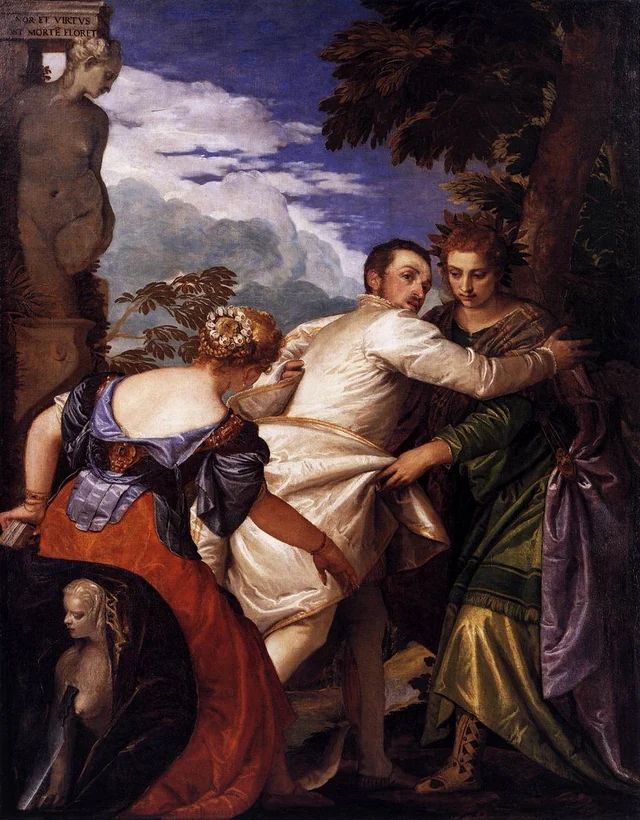
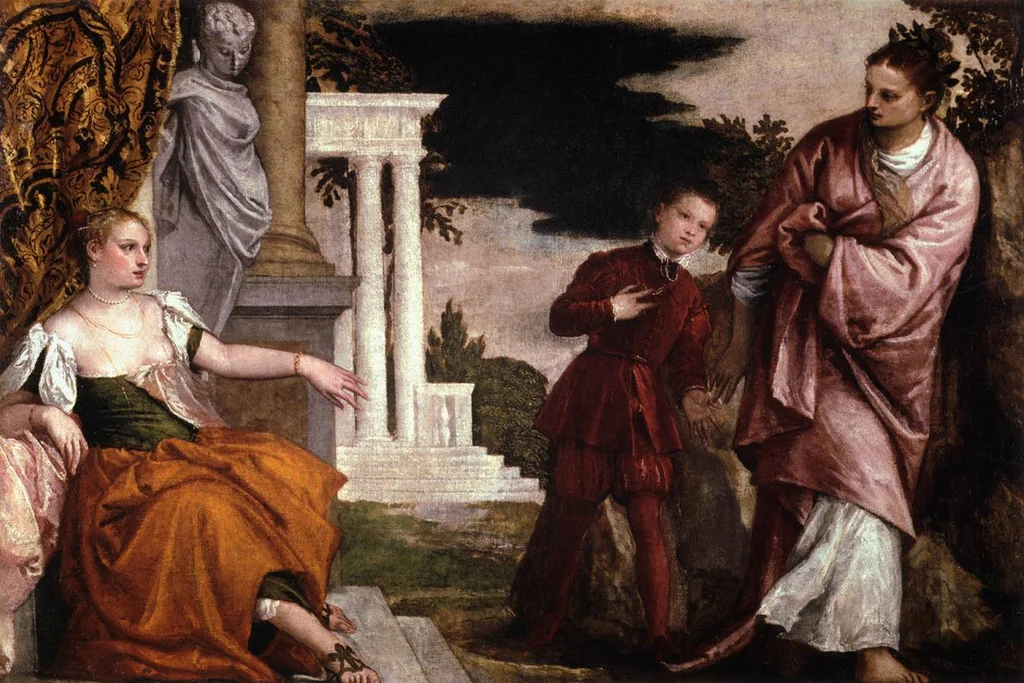
Veronese painted this around 1560. Nearly a century later it was in England, in the collection of the Earl of Arundel, and when that collection was broken up in 1654, after the civil wars that cost Charles I his head, Spain's ambassador in London was among the buyers. The canvas appears in the accounts Alonso de Cárdenas kept for the minister Luis de Haro, who gave it to Philip IV. What the king acquired was a warning aimed at a boy. Vice arrives as a Venetian courtesan, blonde, low-cut, loaded with jewels. Virtue, laurel-crowned and covered to the wrists, already has the child by the hand. The antique statues and buildings around them point to the source Veronese chose, the Greek tale of Hercules meeting two roads, as the Athenian writer Xenophon tells it. The Venetian biographer Carlo Ridolfi later reported that the picture had belonged to Giovanni Battista Sanuto and that the boy was of that family. In Madrid it hung in a dark room of the old Alcázar, and by 1772 in the king's antechamber in the new palace.