The story
The ballet slippers kept here span the history of the dance, from the days of Marie Taglioni, the Romantic ballerina of the 1830s, to Anna Pavlova a century later. They belong to the collection Alexei Bakhrushin built up at the end of the 19th century, and they set the tone for the whole museum: theatre told through what performers wore, used and left behind.
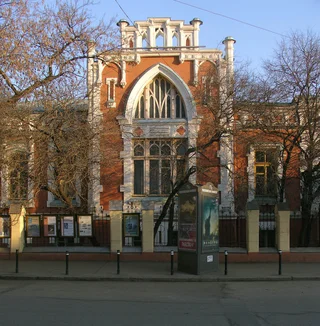
Bakhrushin came from a Moscow family of leather and cloth manufacturers. The story goes that a cousin boasting about playbills and photographs bought from antique dealers is what got him started, and the hobby soon became a passion. He showed the collection to Moscow's theatre world in October 1894, and two years later the architect Karl Gippius built him a Gothic-style mansion in Zamoskvorechye, the old merchant quarter south of the Kremlin, which still houses the museum.
In 1913 he handed everything to the Academy of Sciences and stayed on as director until his death in 1929. The holdings now run past one and a half million items, from costume and set designs by Léon Bakst and Alexandre Benois, artists of the Ballets Russes, to personal belongings of Mikhail Shchepkin, the great 19th-century actor.