The story
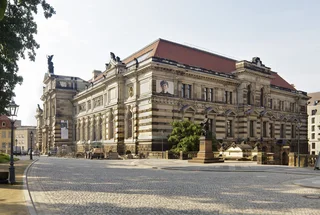
In August 2002 the Elbe rose to a record level in Dresden, and the flood damaged the Albertinum, which stands just behind the Brühl Terrace above the river. The museum drew its lesson in concrete. When it reopened in June 2010 after a renovation costing about 51 million euros, its stores had moved into a new structure by the Berlin firm Staab Architekten, raised some 17 metres above the inner courtyard, and the courtyard beneath was roofed over to make a large hall.
The building began in the 1560s as the Saxon electors' arsenal and was rebuilt in the 1880s as a museum named after King Albert of Saxony. Since 1965 it has shared its rooms between the Sculpture Collection and the Galerie Neue Meister, Dresden's paintings from the Romantics onwards.
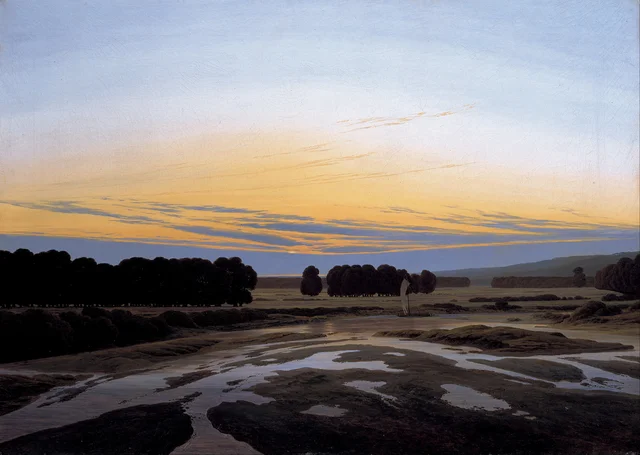
Caspar David Friedrich, who lived in Dresden for most of his adult life, anchors the painting galleries. Besides his Two Men Contemplating the Moon, the collection holds The Great Enclosure, painted around 1832, a view over the Ostragehege, a stretch of Elbe floodplain on the north-western edge of the city, its sandbanks and pools catching an evening sky. Further on come Otto Dix's War triptych and a suite of rooms devoted to Gerhard Richter, who was born in Dresden in 1932.