The story
On the ground floor of the Angermuseum in Erfurt there is a small vaulted room whose walls were painted between 1922 and 1924 by Erich Heckel, a founding member of the Brücke group of Expressionists. The cycle is called Stages of Life, and it is counted among the most important surviving murals of German Expressionism. It survived by being hidden. In the Nazi years local supporters of the regime called the room a chamber of horrors and threatened to wreck it, so Magdalene Rudolph, the museum's acting director at the time, had it closed off behind a hastily built wall.
The room belonged to a museum that bought modern art early. In the 1920s, under the director Herbert Kunze, Erfurt acquired Expressionists such as Lyonel Feininger and Emil Nolde, and many of those works were lost when the Nazis purged so-called degenerate art.
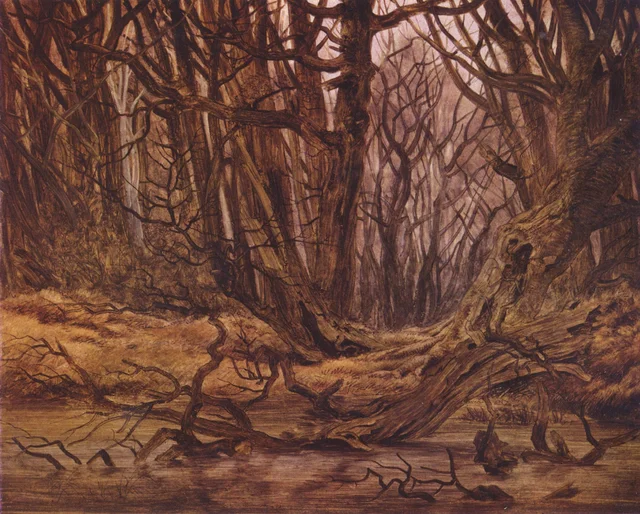
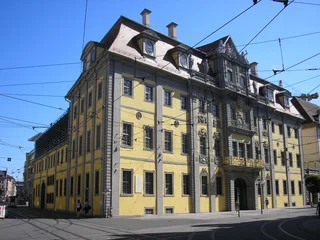
The building is older than all of this. It is the Packhof, the city's baroque weighing house from the early 18th century, with Saint Martin in its gable. Inside, the collection runs from medieval altarpieces and panels by Lucas Cranach the Elder to a forest in late autumn painted by Caspar David Friedrich in the last years of his career.