The story
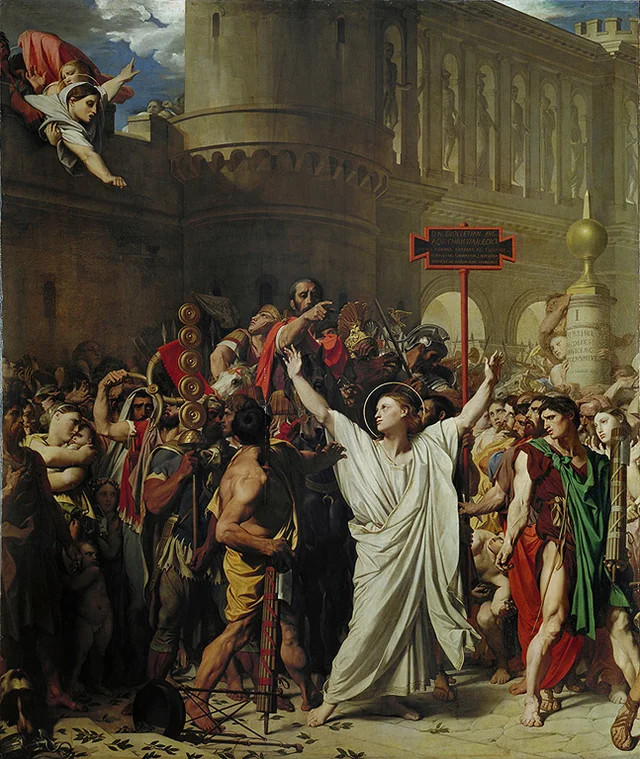
At the Paris Salon of 1834, Jean-Auguste-Dominique Ingres, the great defender of classical drawing in French painting, showed a canvas he had worked on for nearly ten years. The state had commissioned it in 1824 for Autun Cathedral, and Ingres had even travelled to Autun to study the place and its architecture. The critics attacked it hard. Wounded, he left Paris and secured the post of director of the French Academy in Rome.
The painting went to Autun all the same, and it still hangs in the cathedral, a canvas about four metres high. It shows Symphorian, a young Christian of Roman Autun, led out to execution for refusing to honour the goddess Cybele, while his mother leans from the city wall and calls to him to stand firm.
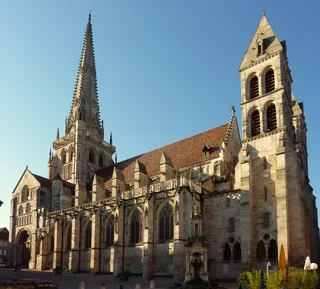
Saint-Lazare is primarily a working Romanesque cathedral, begun around 1120 to house relics of Lazarus and receive the pilgrims who came for them. Most visitors come for its 12th-century sculpture. Over the main west door, a carved Last Judgment fills the tympanum, signed with the words Gislebertus hoc fecit, Gislebertus made this. In 1766 the canons, who thought little of it, had it plastered over, and it stayed hidden until 1837. Inside, the carved capitals tell Bible stories in stone, among them the Flight into Egypt.