The story
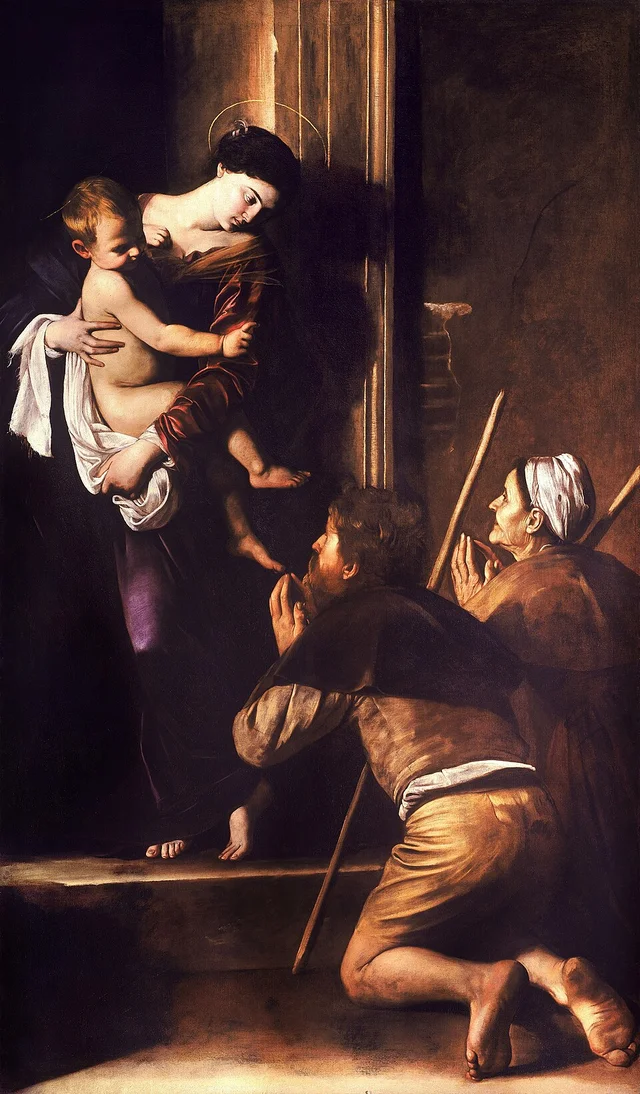
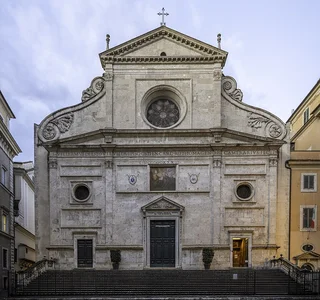
In the first chapel on the left of Sant'Agostino, a working Augustinian church a few streets north of Piazza Navona, two pilgrims kneel at a doorway. The soles of the man's feet face you, bare and dark with dirt. This is Caravaggio's Madonna di Loreto, painted around 1604 to 1606 for the chapel of the Cavalletti, a Roman noble family. The Virgin stands barefoot on the step with the Child in her arms, no grander than the couple in front of her. Giovanni Baglione, a rival painter who had taken Caravaggio to court for libel, wrote that the unveiling set the common people cackling.
The picture is one reason to come among several. On a pillar of the nave Raphael painted the Prophet Isaiah in 1512, while he was also at work on the papal rooms in the Vatican. Just inside the main door sits the Madonna del Parto, the Madonna of childbirth, carved in marble by the sculptor Jacopo Sansovino and finished around 1521. Romans have prayed to her for centuries, and the wall around her is covered with silver votive offerings. The relics of Saint Monica, mother of Augustine himself, rest in a chapel beside the high altar, brought here from Ostia, the old port of Rome, in 1430.