The story
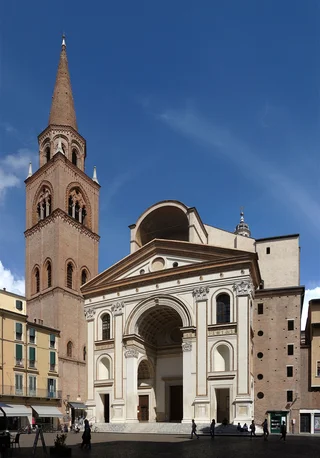
In the crypt of Sant'Andrea, Mantua keeps a vial said to hold the blood of Christ. Legend says the centurion Longinus brought it here with earth from the foot of the cross, and the basilica was built to house it. Ludovico III Gonzaga, ruler of Mantua, commissioned the new church, begun in 1472 to designs by Leon Battista Alberti, the Florentine architect and theorist, who died that same year. The façade reworks an ancient Roman triumphal arch. Inside, Alberti did away with side aisles and opened chapels straight off one vast barrel-vaulted nave. Building went on for three centuries, and the dome, by the Sicilian-born architect Filippo Juvarra, came only in the 18th century.
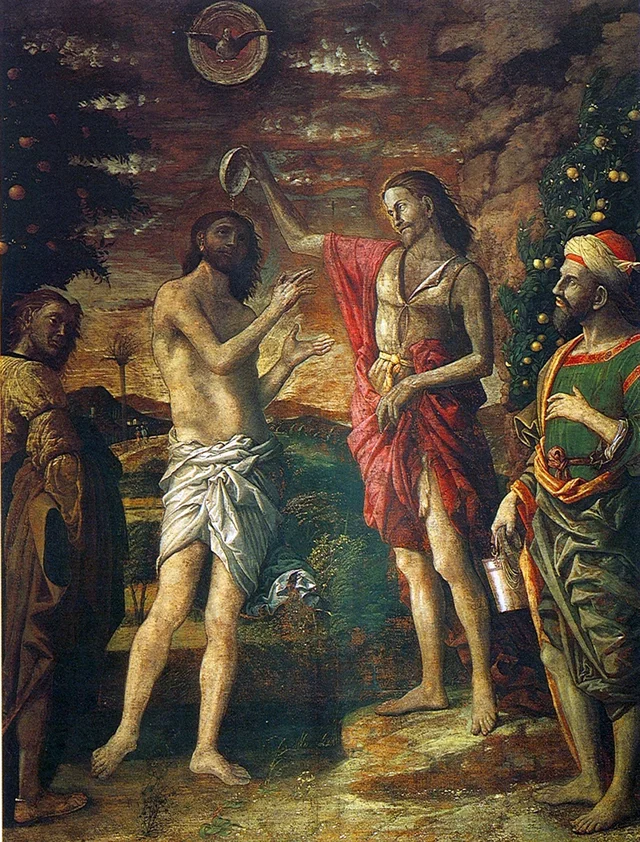
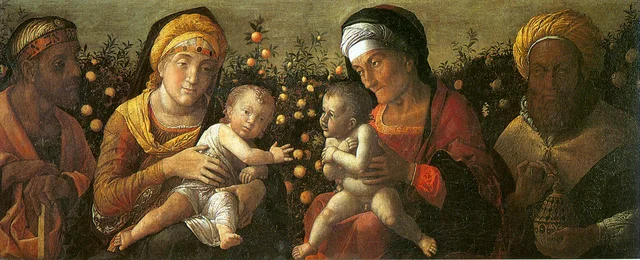
The painter Andrea Mantegna, court artist to the Gonzaga for more than 40 years, chose a chapel here for his own burial. He secured it in 1504 and died in 1506, and his last two paintings stayed with it. The Holy Family with the family of Saint John the Baptist dates from those final years, and the Baptism of Christ above the altar was probably finished by his son Francesco. The chapel's frescoes, painted in 1507, are attributed to his sons together with a young Correggio, and a bronze bust of Mantegna marks his tomb.