The story
Behind the high altar of Santa Maria Novella, the Dominican church by Florence's main railway station, the walls are crowded with Florentines of the 1480s. The banker Giovanni Tornabuoni, uncle of Lorenzo the Magnificent, paid Domenico Ghirlandaio to paint the lives of the Virgin and of John the Baptist, and the painter filled the Bible scenes with his patron's relatives and friends in their best clothes. The young Giovanna degli Albizzi, a Tornabuoni bride, stands among the women of the Visitation. Christ's baptism in the Jordan belongs to the same cycle. While the work went on, in 1488, the 13-year-old Michelangelo was apprenticed to Ghirlandaio's workshop.
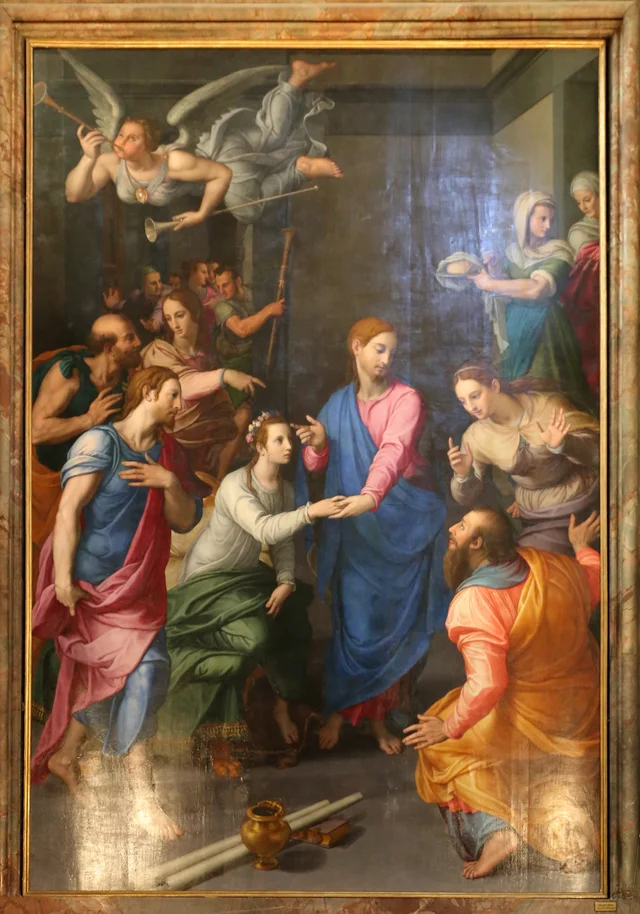
Back in the nave, two other landmarks of Florentine painting wait. On the left aisle wall is Masaccio's Trinity, painted around 1427 and among the first pictures built on Brunelleschi's new rules of perspective. Vasari covered it with a stone altar around 1570, and it was only uncovered again in the 19th century. Giotto's painted Crucifix hangs high over the middle of the nave, and in a side chapel Bronzino's Raising of Jairus's Daughter, from the early 1570s, shows Christ lifting the girl by the hand among funeral candles.
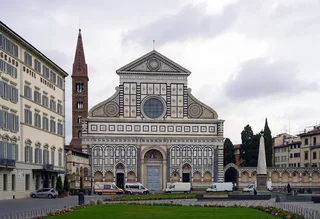
Outside, the green and white marble facade was completed in 1470 to designs by Leon Battista Alberti, the architect and theorist. The name of the merchant who paid for it, Giovanni Rucellai, runs across the top in large Roman capitals.