The story
The best-known exhibits here are two life-size stone men. One strains against his chains with his face twisted, and the other lies slack and staring. The Danish-born sculptor Caius Gabriel Cibber carved them around 1676 as Raving Madness and Melancholy Madness, and for well over a century they lay on the gate posts of Bethlem Hospital at Moorfields in London, where every passer-by could see what the building was for.
The hospital was already old by then. It was founded in 1247 as a priory of St Mary of Bethlehem and was taking in people with mental illness by the early 1400s. Londoners shortened its name to Bedlam, and the word passed into English for any scene of uproar. Since 1930 Bethlem has stood in parkland at Beckenham, on the southern edge of London. The museum is first of all about the history of psychiatric care, and it opened in its present form in 2015 in an Art Deco building in the hospital grounds.
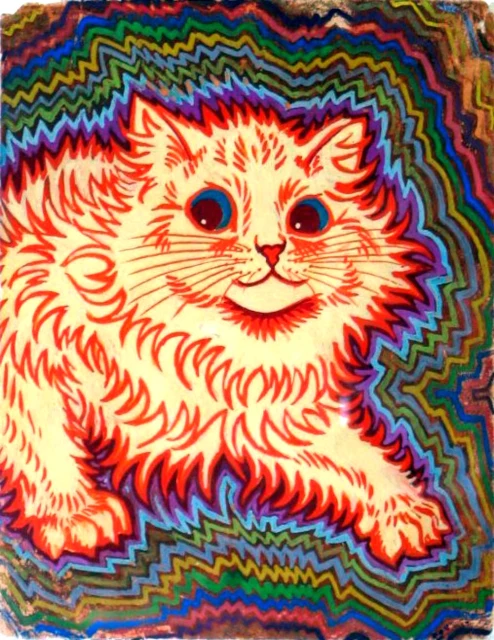
Art lovers come for the work made by patients. Richard Dadd, a Victorian painter of fairy scenes, was admitted in 1844 after killing his father and went on painting in the hospital for 20 years. Louis Wain, whose cats in human clothes had filled London's magazines, was a patient from 1925 to 1930, and the museum owns eight of his patterned "kaleidoscope" cats. Both men lived in Bethlem's previous building in Southwark, which now houses the Imperial War Museum. The Canadian painter William Kurelek made The Maze in 1953 while he was being treated at the Maudsley, Bethlem's sister hospital, and painted his own head opened up with a labyrinth inside.