Cenacolo di Sant'Apollonia Museum
Florence, Italy
The story
In Andrea del Castagno's Last Supper, Judas sits alone on the near side of the table, apart from the other apostles, in front of a wall of brightly veined marble panels painted to look real. Castagno, one of the boldest Florentine painters of the generation after Masaccio, frescoed the whole end wall of this nuns' refectory around 1447, with the Crucifixion, the Deposition and the Resurrection above the supper.
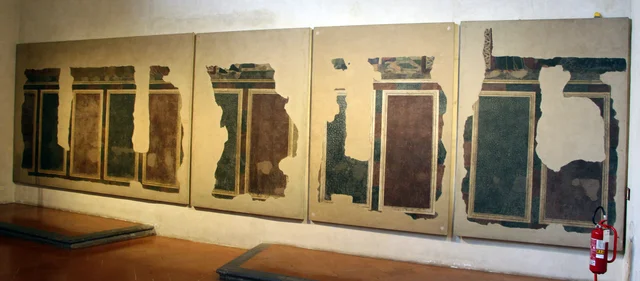
The convent of Sant'Apollonia belonged to Benedictine nuns living in enclosure, so for centuries the painting was hidden from the city. It became known only after the convent was suppressed in the 19th century. Damp later damaged the scenes above, and when they were taken off the wall in 1953 restorers found Castagno's sinopie, the reddish underdrawings, which are now shown in the same room.
The former refectory also displays sinopie from a lost cycle of the life of the Virgin in the Florentine church of Sant'Egidio, begun by Domenico Veneziano and continued by Castagno in 1451, together with paintings by Neri di Bicci and Paolo Schiavo from the convent.