The story
In a case at the Foundling Museum in London lie a few small objects, a coin, a button, a scrap of ribbon, a short poem. Mothers who left their babies at the Foundling Hospital in the 1700s attached these as tokens, hoping one day to identify and reclaim the child. Very few ever did.
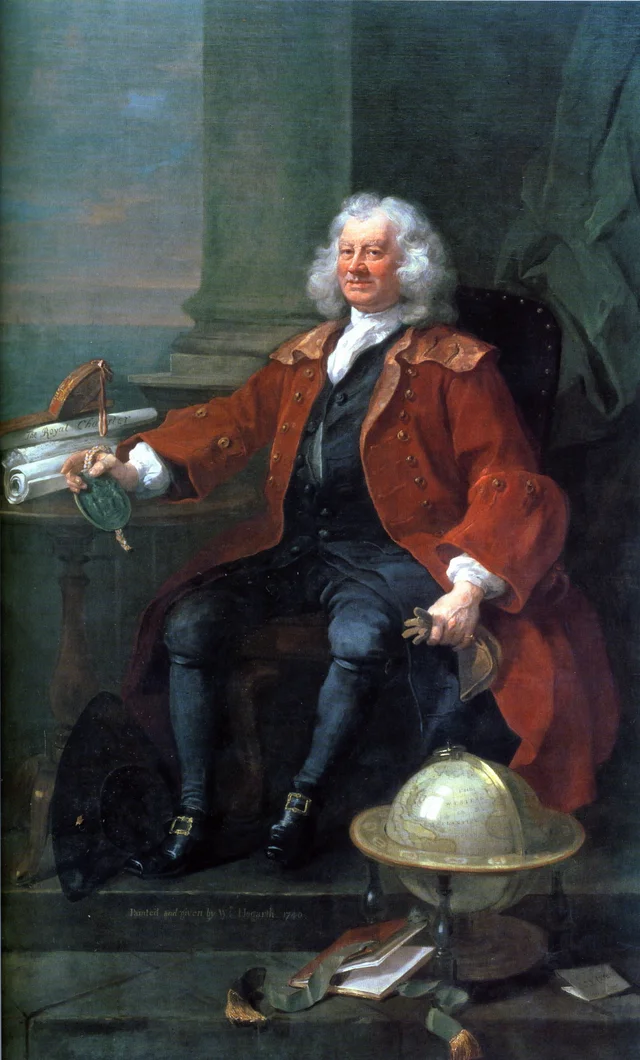
The hospital was founded in 1739 by Thomas Coram, a retired sea captain appalled by the infants abandoned on London's streets. The painter William Hogarth was one of its first governors, and he saw a second use for it. He donated his own portrait of Coram, painted in 1740, and persuaded other artists to follow. Thomas Gainsborough, then 21, painted a small round view of the Charterhouse in 1748, one of eight roundels of London charities that still hang in the Court Room. Joshua Reynolds added a portrait of the Earl of Dartmouth in 1757. Fashionable London came to look, and the hospital is often called Britain's first public art gallery.
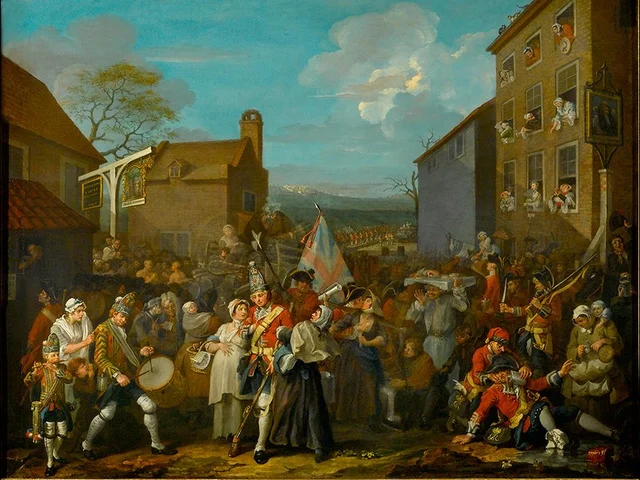
Hogarth's March of the Guards to Finchley, a crowded satire of soldiers setting off against the Jacobite rising of 1745, arrived by luck. In 1750 he raffled it, gave the hospital the unsold tickets, and one of them won. The composer George Frideric Handel helped with benefit performances of Messiah and left the hospital a copy of the score, still in the museum.
The old hospital was pulled down in 1926. The present building on Brunswick Square, finished in 1937, reuses its interiors, among them the Court Room where the governors met beneath those paintings.