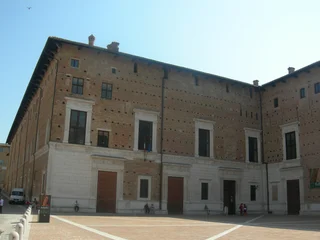
The story
The Galleria Nazionale delle Marche fills the Palazzo Ducale of Urbino, the hilltop palace built for Federico da Montefeltro, the soldier-duke who ruled the town in the 15th century. Two of its pictures are by Piero della Francesca, the Tuscan master of perspective. His small Flagellation of Christ sets the scourging far back in a classical hall while three men stand talking in the foreground, and who those three are has been argued over for a very long time. His Madonna di Senigallia came from a church in the nearby coastal town.
One brotherhood runs through several rooms here. Urbino's Confraternity of Corpus Domini, a lay company devoted to the Eucharist, wanted a new altarpiece in the 1470s, and the duke gave the commission to the Flemish painter Justus of Ghent. His Communion of the Apostles includes Federico himself, in his famous profile with the broken nose. About 70 years later a processional banner was ordered from Titian for the same confraternity, painted on both sides, with the Resurrection on one face and the Last Supper on the other. The two faces were soon separated and framed, and they now hang here as two pictures.
Among the gallery's later arrivals is a narrow panel of Saint Catherine of Alexandria, an early work by Raphael, who was born in Urbino. It had belonged to a Florentine collection that was broken up, and the Italian state bought it back in 1990.
Collection
7 works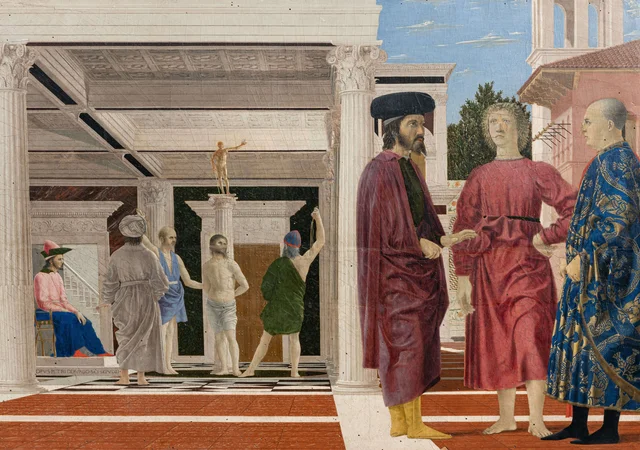 Flagellation of ChristPiero della Francesca, 1459
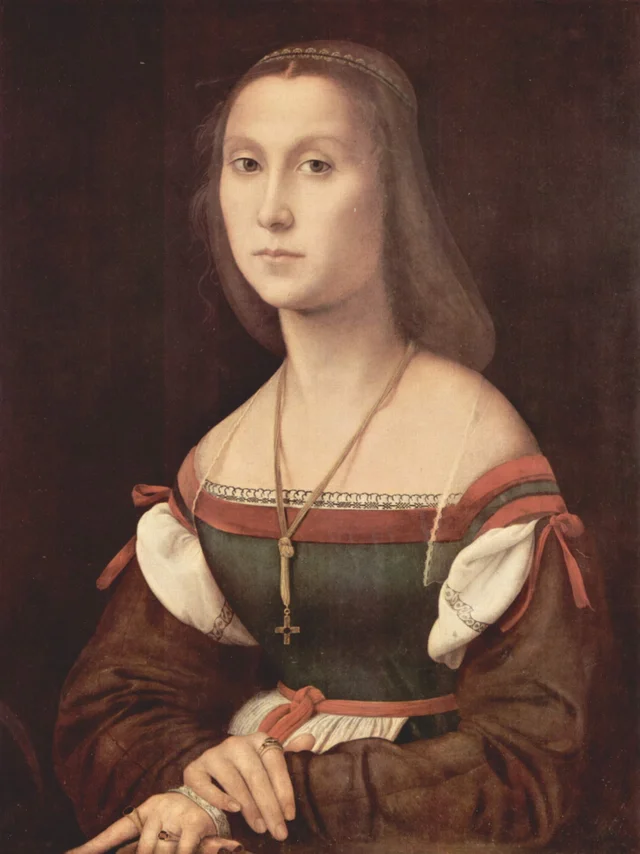 Portrait of a Young WomanRaphael, 1507
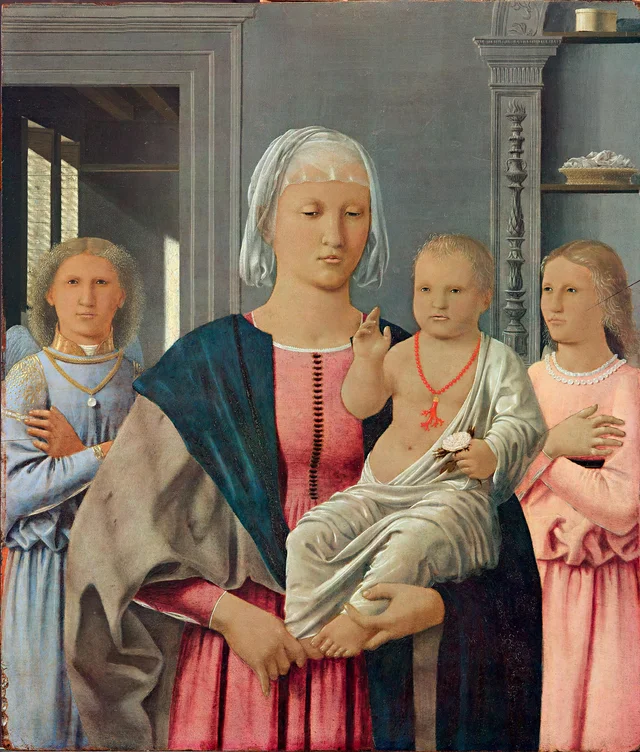 Madonna di SenigalliaPiero della Francesca, 1476
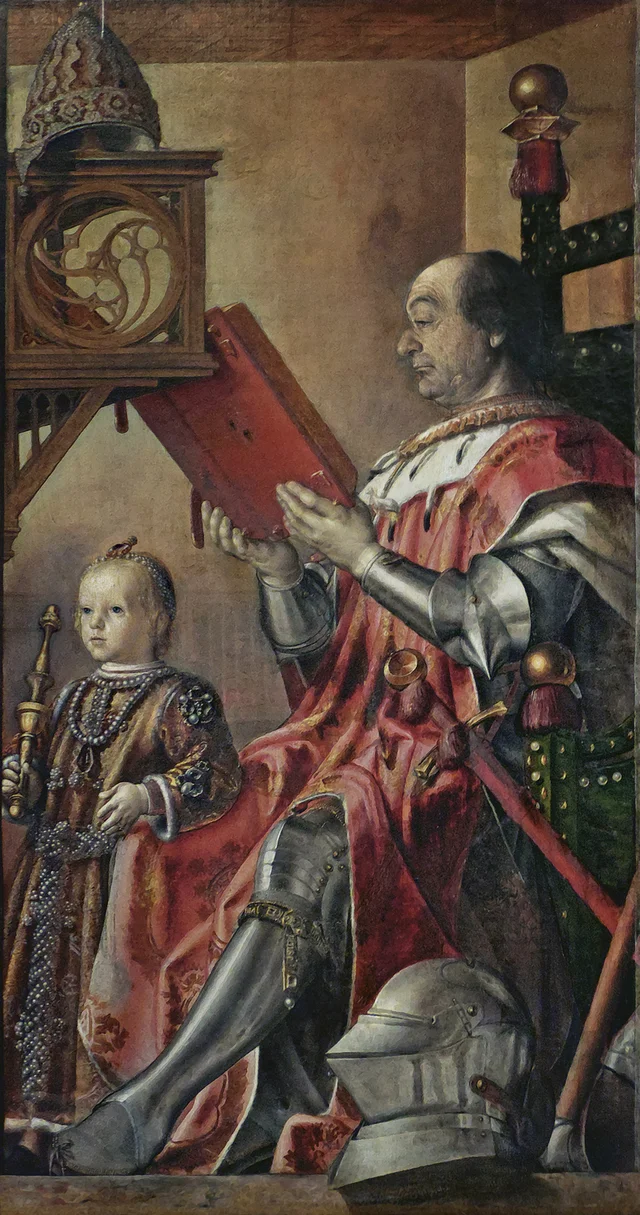 Portrait of Federico da Montefeltro with His Son GuidobaldoPedro Berruguete, 1470
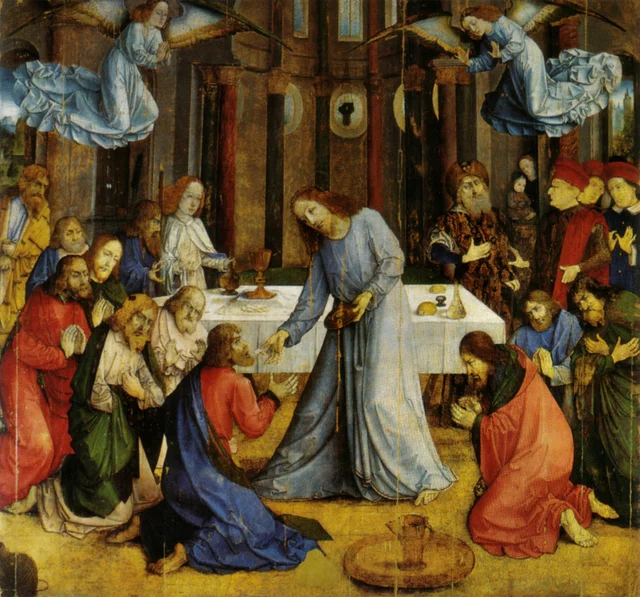 Pala del corpus dominiJustus van Gent, 1474
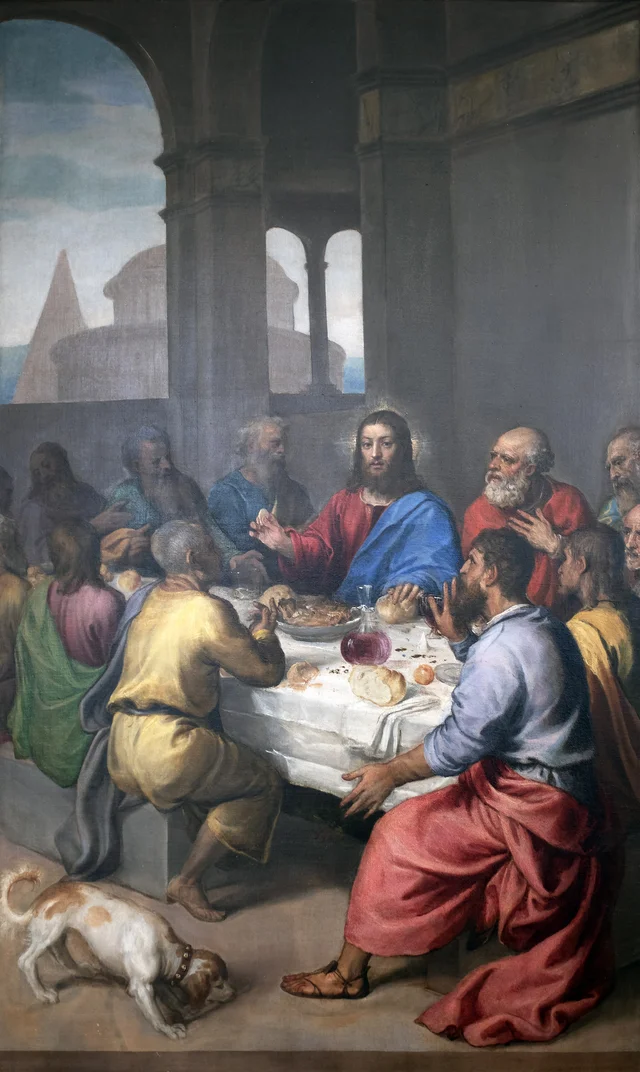 Last SupperTitian, 1543
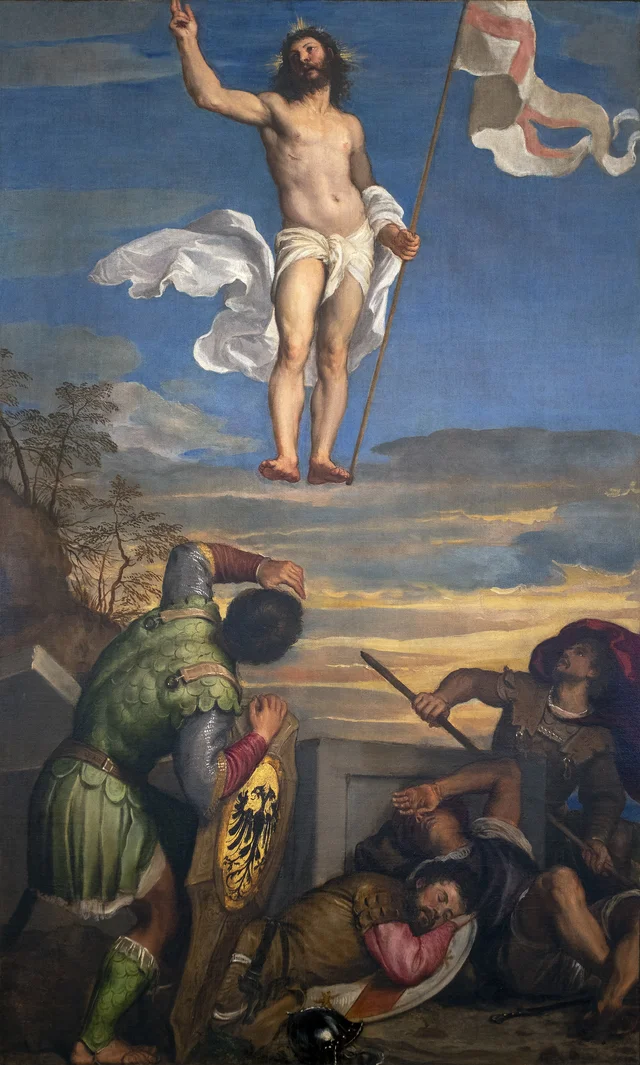 Resurrection of ChristTitian, 1543