The story
When Hans von und zu Aufsess, a Franconian baron with a passion for the medieval past, founded this museum in 1852, Germany did not yet exist as a country. His idea was to gather the whole material record of German-speaking culture under one roof before it scattered, and the result grew into the largest museum of its kind, spanning prehistory to the 20th century.
The collection is enormous, but a few things pull visitors across it. There is a deep holding of Albrecht Dürer, Nuremberg's own painter and printmaker. And there is the Behaim globe, made in the city in 1492 by the merchant Martin Behaim, the oldest surviving globe of the Earth, its surface showing a world with no Americas on it because news of them had not yet arrived.
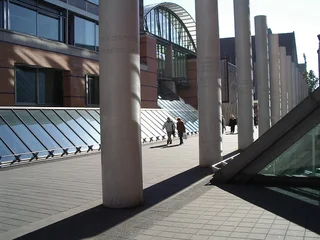
You reach the entrance along the Street of Human Rights, a row of white pillars by the Israeli artist Dani Karavan, each carved with an article of the Universal Declaration in a different language. It was installed in 1993, a deliberate answer to what Nuremberg's name had come to mean in the 20th century.
Collection
15 works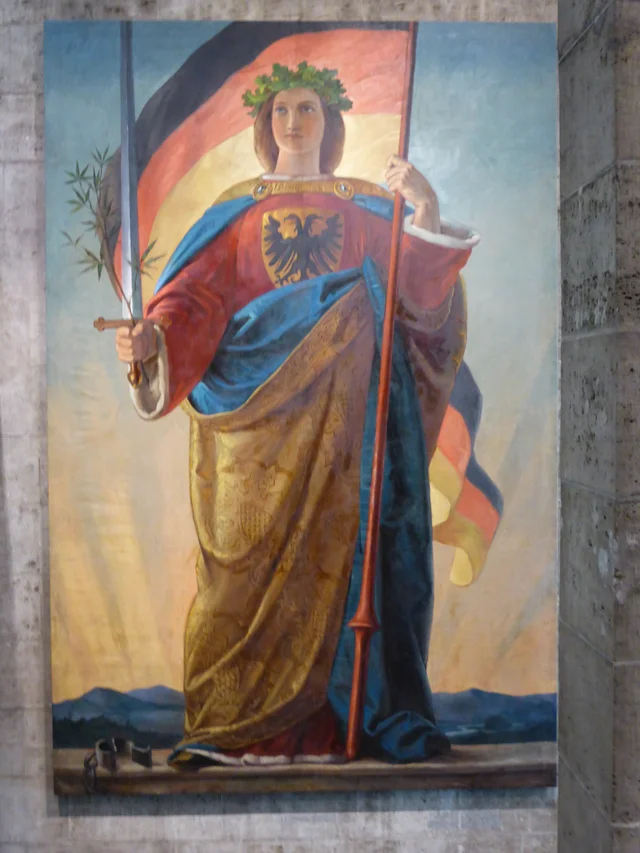 GermaniaPhilipp Veit, 1848
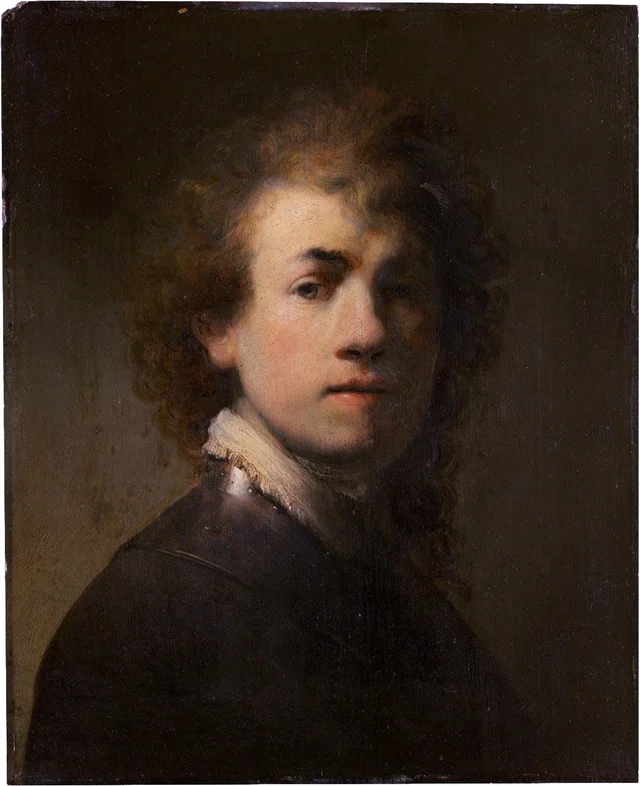 Self-portrait with breastplateRembrandt, 1629
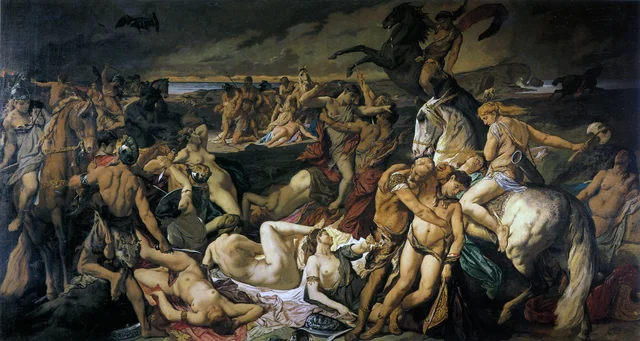 Battle of the AmazonsAnselm Feuerbach, 1873
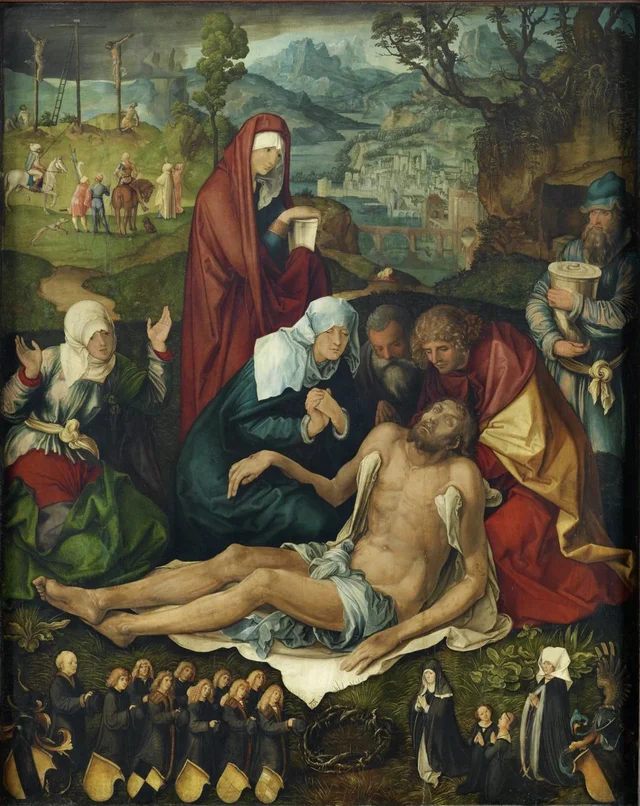 Lamentation of ChristAlbrecht Dürer, 1498
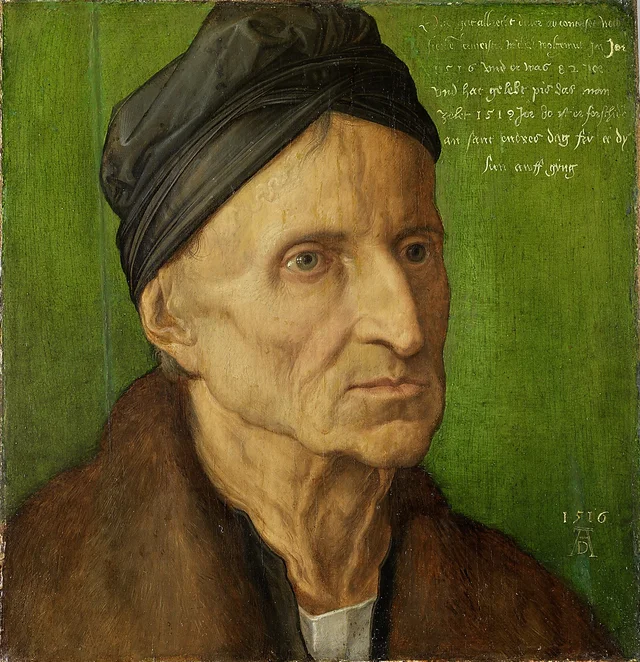 Portrait of the Nuremberg Painter Michael WolgemutAlbrecht Dürer, 1516
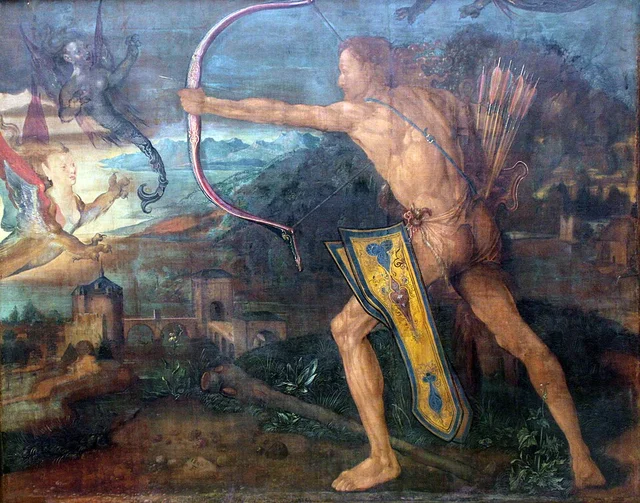 Hercules Killing the Stymphalian BirdsAlbrecht Dürer, 1500
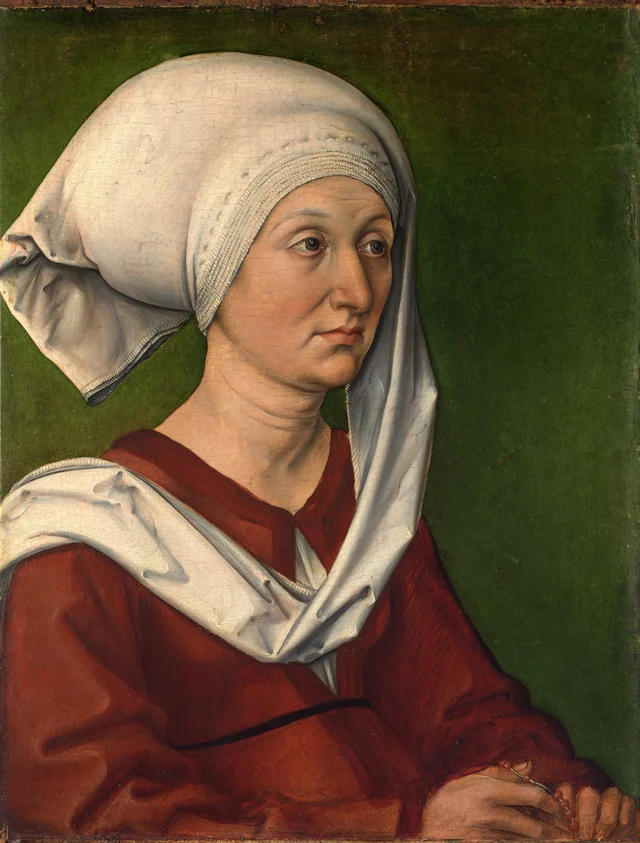 Portrait of Barbara HolperAlbrecht Dürer, 1490
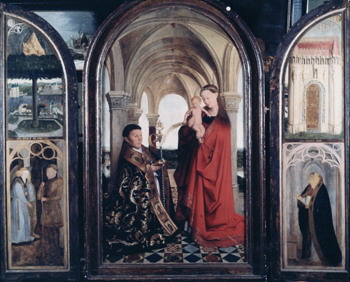 Madonna and Child with a DonorAnonymous, 1757
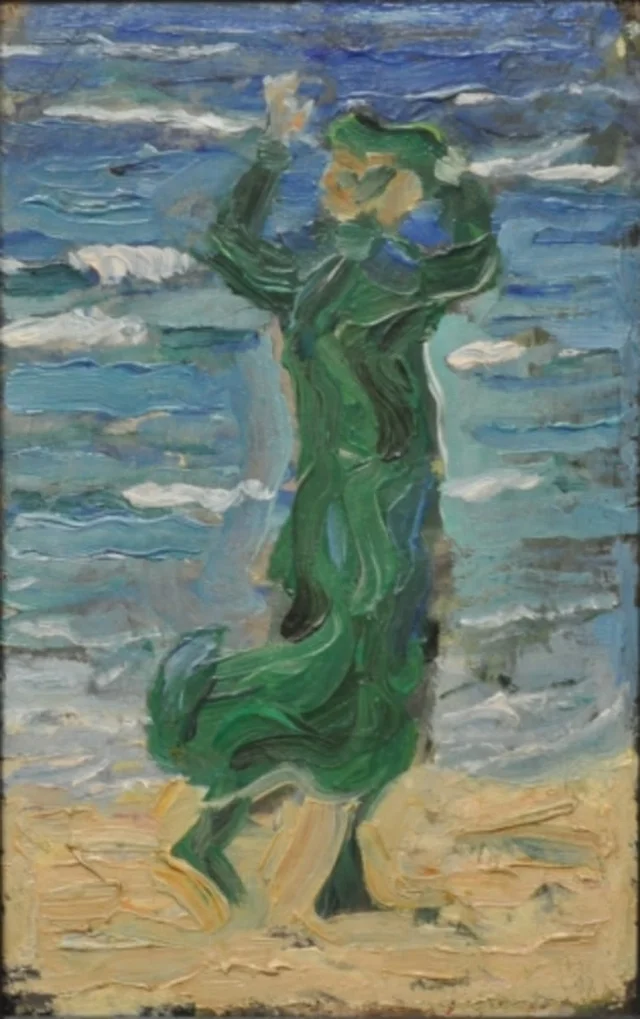 Woman in the Wind by the SeaFranz Marc, 1907
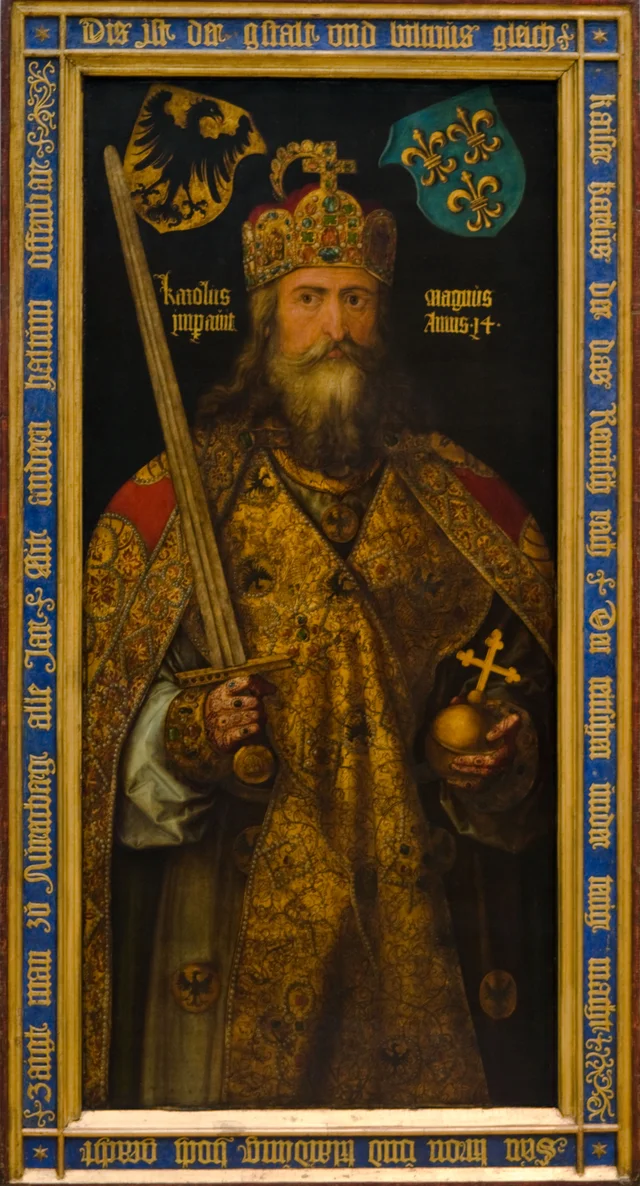 Emperor CharlemagneAlbrecht Dürer, 1511
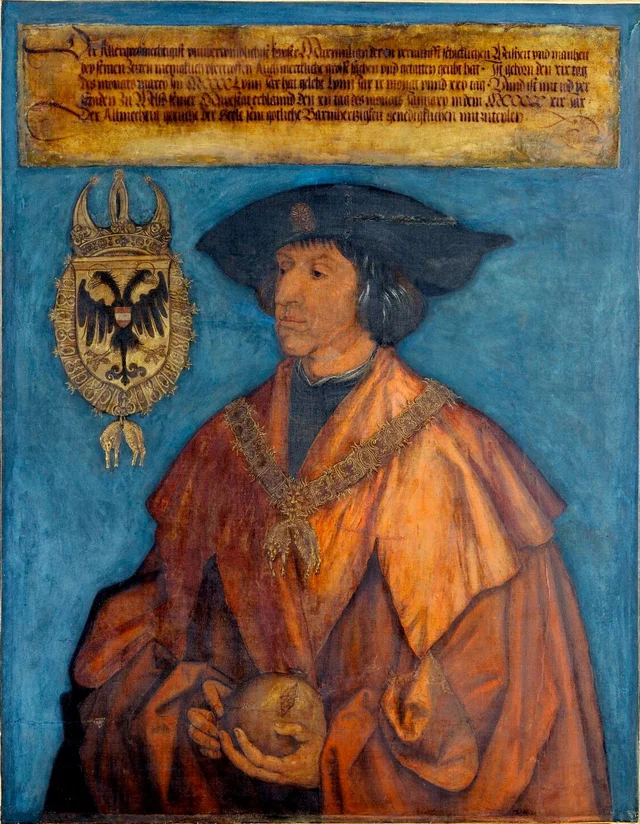 Emperor Maximilian IAlbrecht Dürer, 1519
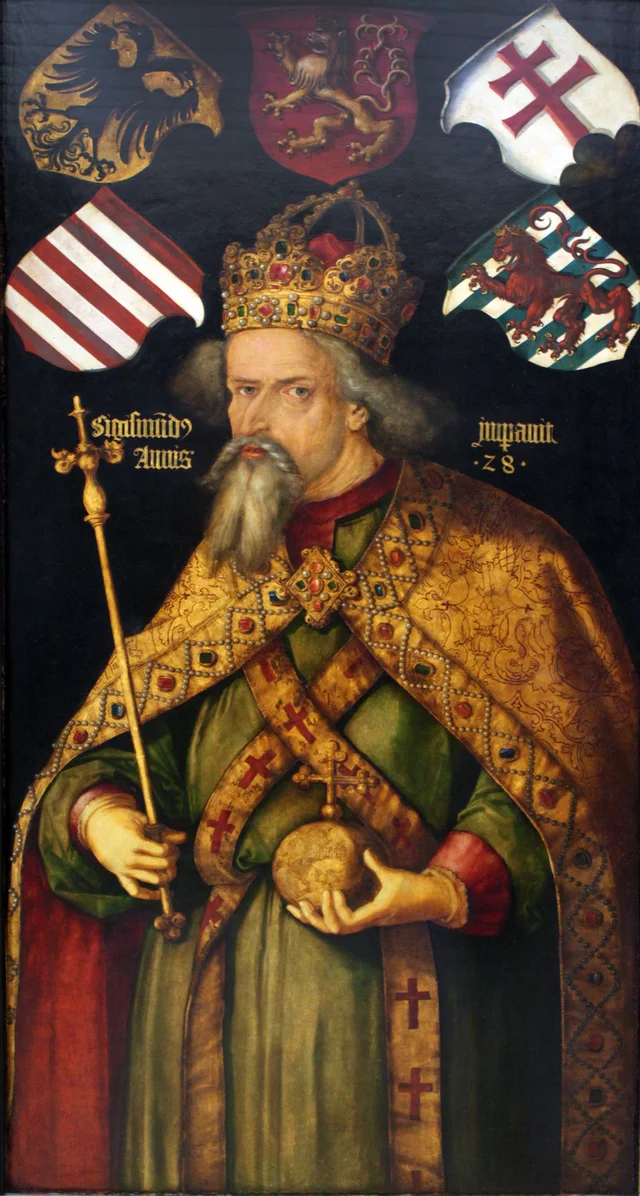 Emperor SigismundAlbrecht Dürer, 1512
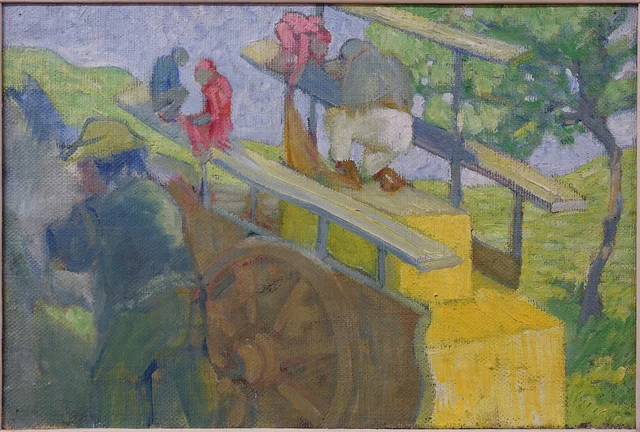 Little monkey on a cartFranz Marc, 1906
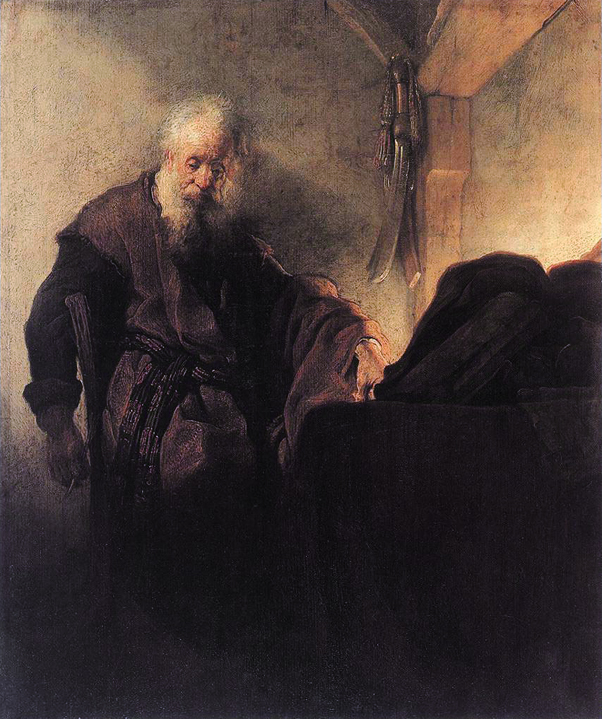 The Apostle Paul in ContemplationRembrandt, 1630
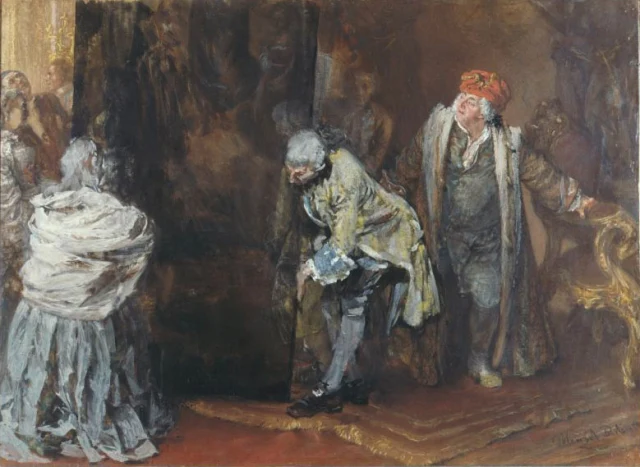 Make Way for the Great Raphael!Adolph von Menzel, 1859