The story
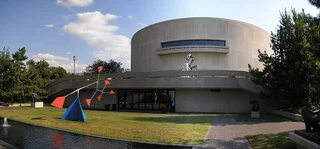
On the National Mall, among the stone temples of government, sits a windowless concrete drum raised on four massive piers. Washingtonians have called it the doughnut since it opened in 1974. The architect Gordon Bunshaft designed it as a ring 70 metres across around an open courtyard with a fountain, so the galleries curve without end.
The building exists because of one collector. Joseph Hirshhorn, a Latvian-born immigrant who made his fortune in uranium mining, gave his collection to the nation in 1966 by an Act of Congress, and the Smithsonian built this museum to hold it. The opening show alone hung 850 works and drew a million visitors in six months.
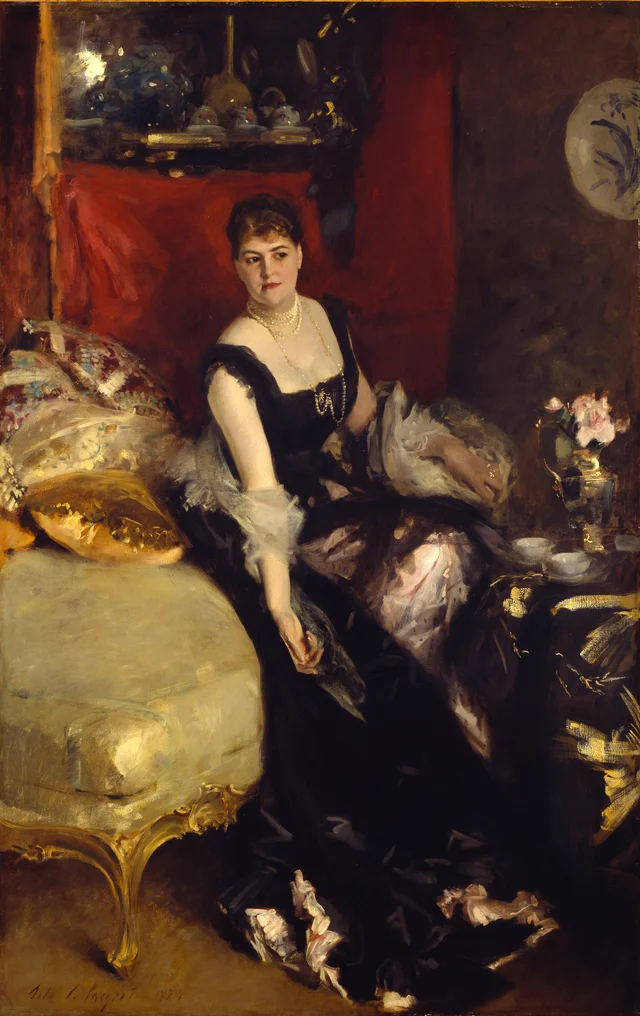
Today the Hirshhorn is the Smithsonian's museum of modern and contemporary art, yet Hirshhorn's own collecting reached back into the 19th century, and those older pictures belong here too. They include Edward Hopper's Hotel by a Railroad from 1952, a couple in a hotel room above the tracks, John Singer Sargent's 1884 portrait of Mrs. Kate A. Moore, and Two Women on the Veranda, painted by Edvard Munch in 1924.
Across Jefferson Drive lies the sunken Sculpture Garden, rebuilt over four years to a design by the Japanese artist Hiroshi Sugimoto and reopening in autumn 2026 with some 60 works, among them Auguste Rodin's Burghers of Calais.