The story
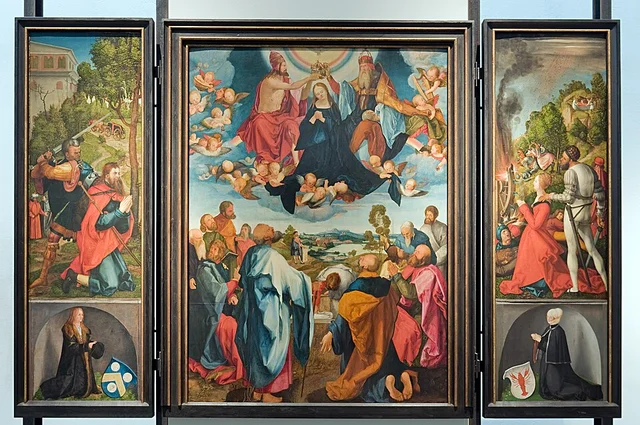
In 1507 Jakob Heller, a wealthy Frankfurt merchant, ordered an altarpiece from the painter Albrecht Dürer in Nuremberg for his family's tomb in the city's Dominican church. Dürer's letters to him survive, full of grumbling about how much time and money the central panel was costing him, and with a promise that if it were kept clean it would stay fresh for 500 years. It never had that chance. In 1614 the friars sold the panel to Duke Maximilian of Bavaria, and it was later lost in a fire in Munich.
What you meet at the Historisches Museum Frankfurt is the altar as the city kept it: the painted wings from Dürer's workshop, framing an early 17th-century copy of the lost centre by the Nuremberg painter Jobst Harrich. This is Frankfurt's own history museum, founded in 1878, and the altar is one city story among many.
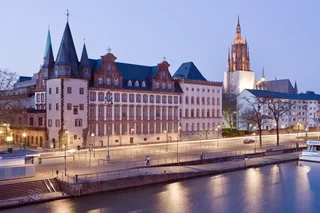
The building is part of the visit. The museum sits in the Saalhof on the bank of the Main, a cluster of five buildings around a chapel from the Staufer era, about 800 years old and the oldest standing building in Frankfurt. A new sandstone exhibition hall joined it in 2017. Inside are rooms built around twelve former private collections, and the wooden model of the old town made by the brothers Hermann and Robert Treuner, showing the streets as they looked before the bombing of the Second World War.