Instituto Valencia de Don Juan
Madrid, Spain
The story
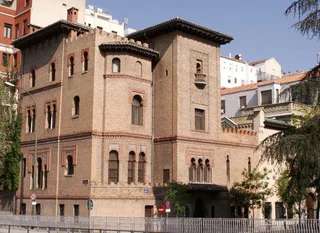
Behind a tiled neo-Mudéjar façade on Calle Fortuny, in Madrid's Almagro quarter, is a house that still feels like a private collection, because it was one. The diplomat and archaeologist Guillermo de Osma and his wife Adelaida Crooke, Countess of Valencia de Don Juan, turned their home and everything in it into a foundation in 1916, to keep it together and open to scholars. Among the first trustees were the former Spanish prime minister Antonio Maura and the American collector Archer Huntington.
Osma's passion was Spanish decorative art, above all the gold-lustred pottery of Manises near Valencia, about which he wrote a book in 1906. The institute keeps a renowned collection of Hispano-Moresque lustreware, along with tapestries, textiles, arms and carved jet. Its archive holds 710 medieval parchments and some 40,000 later documents, many from the reigns of the Catholic Monarchs and Philip II.
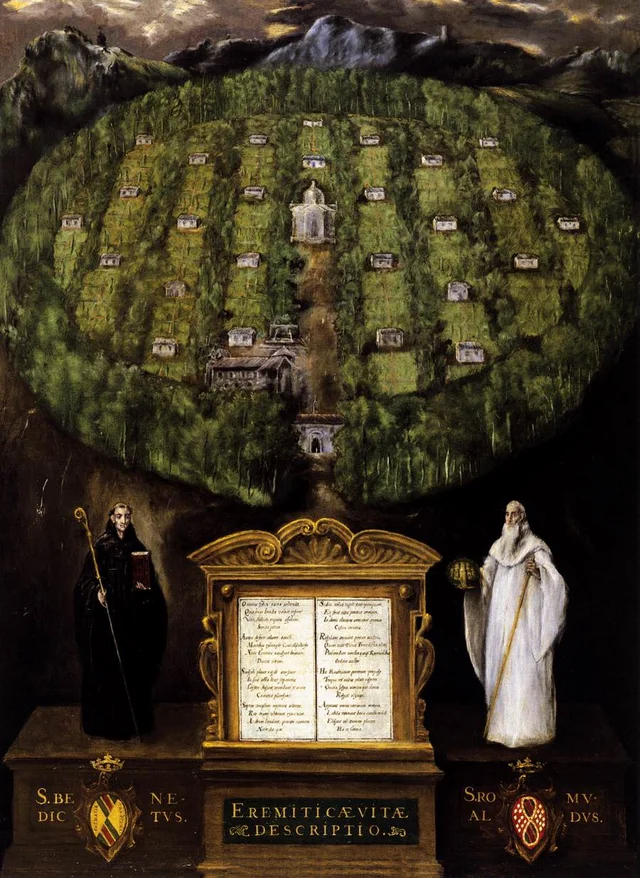
The painting most visitors come to see is by El Greco. His Allegory of the Camaldolese Order, from around 1600, is a bird's-eye view of an ideal hermitage, rows of monks' cells set in a circular clearing among mountains. It was probably painted to support a friar's petition of 1597 asking Philip II to bring that order of hermit monks to Spain. A near-identical, slightly larger version is in Valencia, at the Colegio del Patriarca.