The story
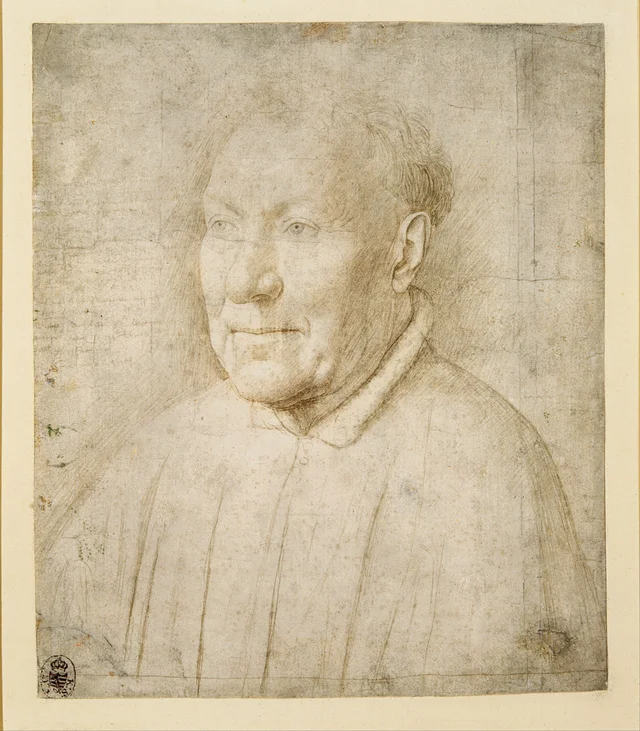
In a drawer in Dresden's royal palace lies a sheet of paper on which, in the 1430s, the Flemish painter Jan van Eyck drew an old man's face in silverpoint and wrote notes beside it about the colours he would need for the painted portrait. That painting is now in Vienna. The sitter has long been called Cardinal Niccolò Albergati, a papal diplomat, but who he was is still an open question. Like most of the collection, the drawing is shown only from time to time, since light harms paper.
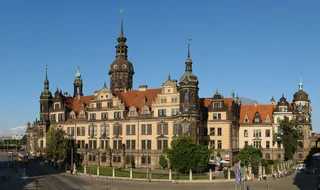
That is the nature of the Kupferstich-Kabinett, the Dresden State Art Collections' museum of prints and drawings. It holds more than half a million works on paper, from Albrecht Dürer and Rembrandt to the Romantic painter Caspar David Friedrich, along with about 200 works by Käthe Kollwitz, the Berlin printmaker. In 2004 it became the first collection to move back into the rebuilt Residenzschloss, the palace of the Saxon rulers. Visitors see changing exhibitions on an upper floor, and anyone can ask to have particular sheets brought out in the Study Room.
The holdings grew out of the art chamber of the Saxon electors and became a separate museum in 1720 under Augustus the Strong, elector of Saxony and king of Poland. In the Second World War most of it was moved to Weesenstein Castle outside the city and escaped the bombing of February 1945. Afterwards the Red Army took the bulk of it to the Soviet Union, and most of it came back by 1958. Around 50,000 sheets are still missing.