The story
Most of what the Kupferstichkabinett owns is kept in storage boxes, because drawings and watercolours fade in daylight. Its roughly 110,000 drawings and 550,000 prints come out a few at a time, for changing exhibitions at the Kulturforum, the cluster of museums near Potsdamer Platz, or on a table in the study room for visitors who book ahead.
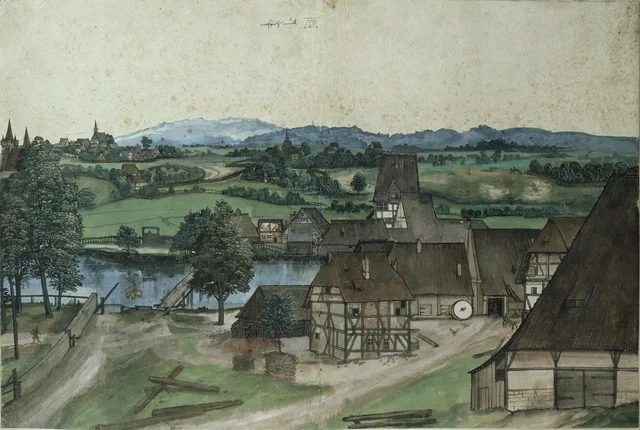
The museum was founded in 1831 around a group of drawings bought by the Elector of Brandenburg in 1652, and its fame rests on a few great purchases. In 1835 it acquired the collection of Karl Ferdinand von Nagler, the Prussian postmaster general, with its drawings by Albrecht Dürer, among them the small watercolours he made around Nuremberg in the 1490s, such as a wire-drawing mill on the river Pegnitz. In 1882 came the drawings Sandro Botticelli made to illustrate Dante's Divine Comedy, bought from the Duke of Hamilton in Scotland.
The holdings run from medieval illuminated manuscripts through Rembrandt, the Berlin painter Adolph Menzel and van Gogh to Picasso, Andy Warhol and Gerhard Richter. The Staatliche Museen zu Berlin call it the largest collection of art on paper in Germany.