Łańcut Castle
Łańcut, Poland
The story
In the summer of 1944, with the Red Army approaching, Count Alfred Potocki, the last private owner of Łańcut, loaded railway wagons with the most valuable objects in his house and left for the West. By early September the rooms he had left behind were open to visitors as a museum.
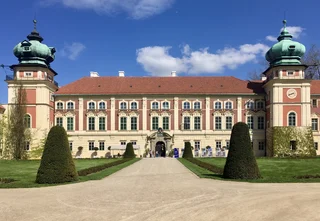
The house was built between 1629 and 1642 as a fortified residence with corner towers for the magnate Stanisław Lubomirski. Its present look comes from Princess Izabela Lubomirska, who after her husband's death in 1783 hired leading architects of the day to turn it into an elegant palace. Today you walk through a Turkish apartment, a Chinese apartment, a mirror salon with rococo carving and a ballroom. In the Columned Salon stands a marble by Antonio Canova, the Italian neoclassical sculptor, showing the young Henryk Lubomirski, a relative of the princess, as Eros. A small theatre, added to the west wing before 1784, is one of only two palace theatres that survive in Poland.
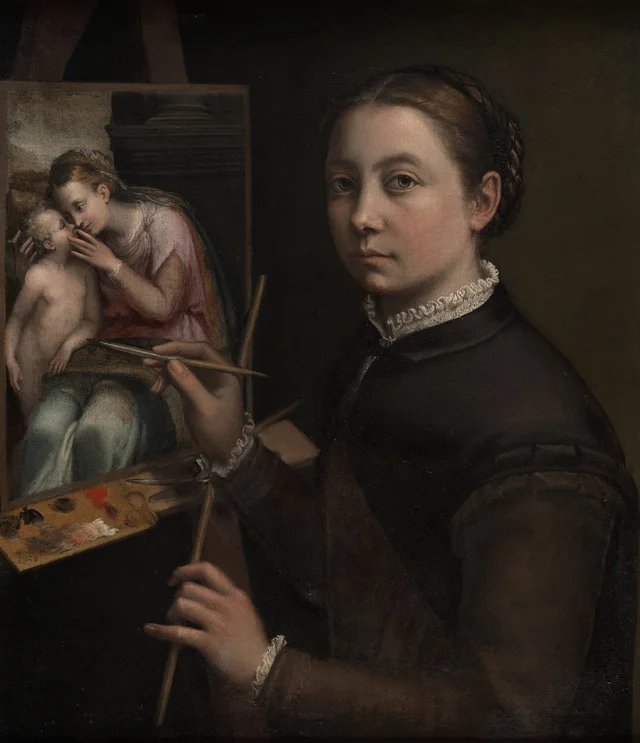
The best-known painting here is a self-portrait by Sofonisba Anguissola, the Renaissance painter from Cremona, made around 1556. She turns from her easel to look at us while painting a Virgin kissing the Christ Child, and the picture was most probably bought by Princess Izabela. A short walk from the castle, a coach house built in 1902 now holds the castle's collection of horse-drawn carriages and sleighs.