The story
In August 1856, quarry workers clearing a small cave in the Neander valley, near Düsseldorf, threw out a skullcap and some heavy limb bones with the mud. A local teacher, Johann Carl Fuhlrott, saw that they were unusual, and the find went on to give the Neanderthals their name. Those original bones, the type specimen scientists still refer back to, are the centrepiece of the LVR-Landesmuseum in Bonn.
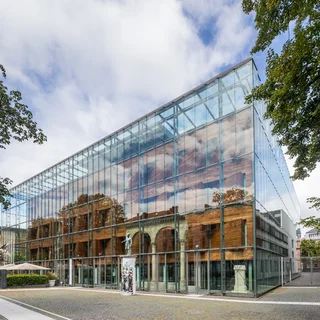
The museum was founded by Prussian decree in 1820 as a museum of Rhenish and Westphalian antiquities, and it remains the archaeology and history museum of the Rhineland. Its first purpose-built home opened in 1893, was destroyed in 1944 and rebuilt in the 1960s. After a long renovation it reopened in 2003, arranged by themes across some 400,000 years of human history.
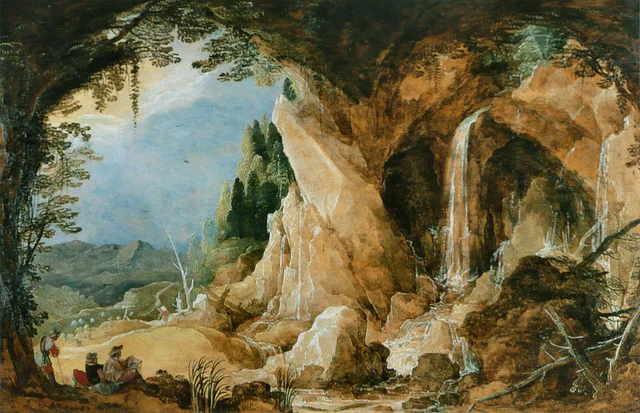
The Roman Rhine is strongly represented. One stone stands out, the tombstone of Marcus Caelius, a Roman centurion who fell in the year 9 when three legions under Varus were destroyed in Germania, and its inscription names that war directly. From the Middle Ages comes the Röttgen Pietà, a 14th-century wooden carving of Mary holding the dead Christ. The paintings run on through the Dutch and Flemish masters and later Rhineland art, among them a rocky landscape with a cave by Joos de Momper, the Antwerp painter of mountain views.