Montauban Cathedral
Montauban, France
The story
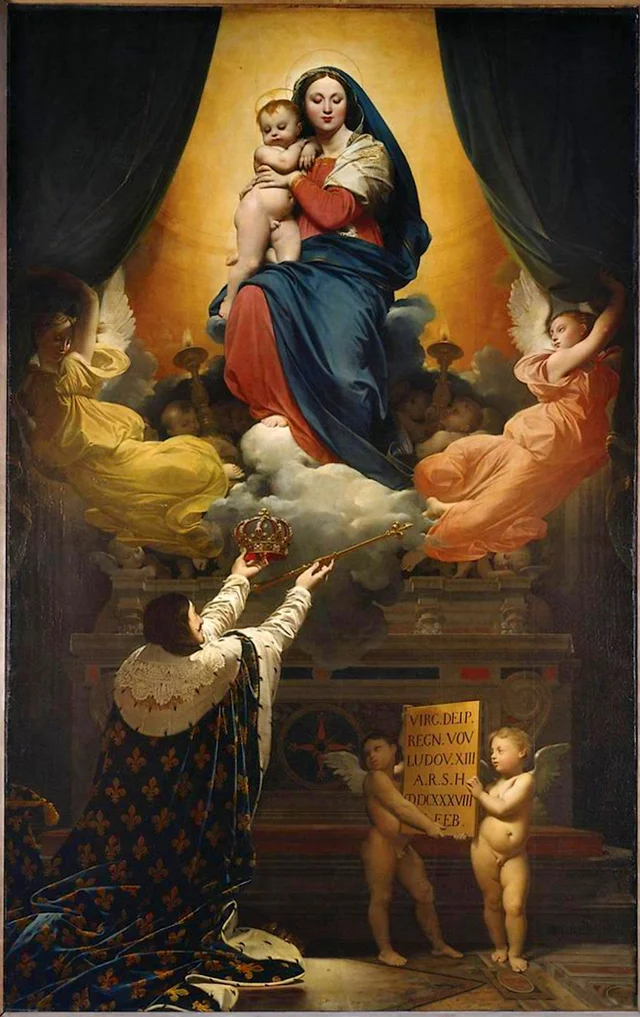
In the north arm of the transept of Montauban's cathedral hangs a painting by a son of the town. Jean-Auguste-Dominique Ingres, the French classical painter born here in 1780, received the State commission in 1820 and finished The Vow of Louis XIII in 1824. It shows the king offering his crown to the Virgin, the vow he made in 1638, and its Madonna owes an open debt to Raphael. Shown at the Paris Salon of 1824, it made Ingres's name.
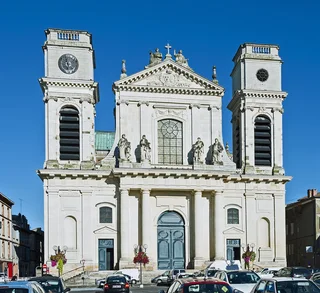
The subject was chosen with care. In 1621 Louis XIII had besieged Protestant Montauban and been forced to withdraw. The cathedral itself made the same point in stone. Louis XIV ordered it after revoking the Edict of Nantes, the decree that had protected French Protestants, and the first stone was laid in 1692 to plant royal and Catholic authority in a town long held by the Huguenots. The royal architect François d'Orbay began it, and after his death the work passed to Jules Hardouin-Mansart and Robert de Cotte, both architects of Versailles. It was consecrated in 1739, a pale stone church in a city built of red brick.