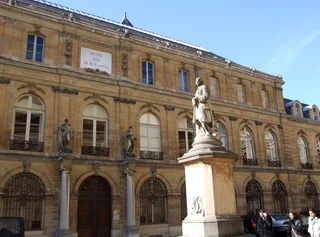
The story
Dijon's fine-arts museum occupies the palace of the dukes of Burgundy, the family that in the 1400s ruled a state richer than the French crown and stretching to the North Sea. When you reach its old Guard Room, you meet them in stone.
Two vast tombs stand there, made for Philip the Bold and John the Fearless, their effigies lying in state above a marble arcade. Around the base of each runs a procession of small alabaster mourners, hooded figures a foot high, several with their faces buried in their cloaks. They were begun by Claus Sluter, the Netherlandish sculptor the dukes brought south, and they are among the most affecting funerary carving to survive from the Middle Ages.
The museum around them is one of the oldest in France, opened in 1787, and climbs from these tombs through Flemish altarpieces to Rubens and later French painting. The ducal kitchens with their six great fireplaces are still there too, built to feed a court.
Collection
8 works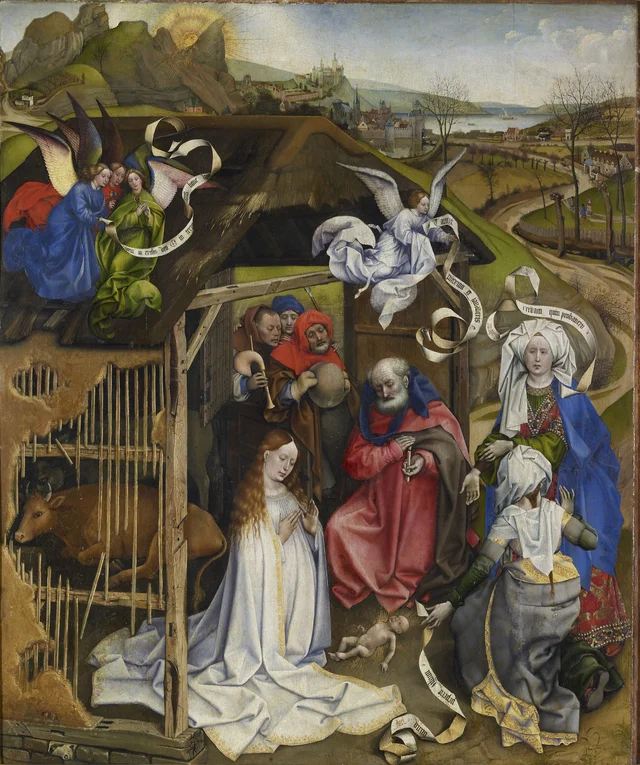 NativityRobert Campin, 1430
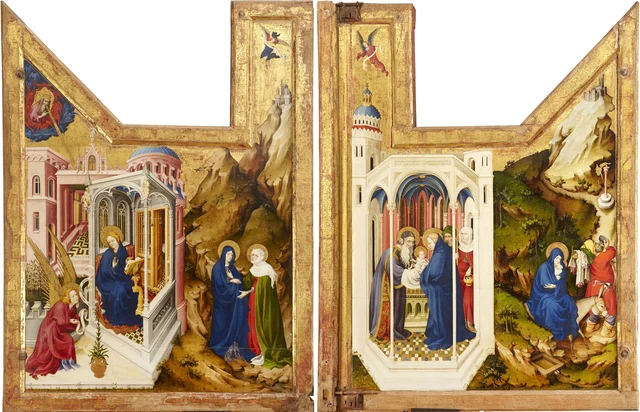 Crucifixion RetableMelchior Broederlam, 1390
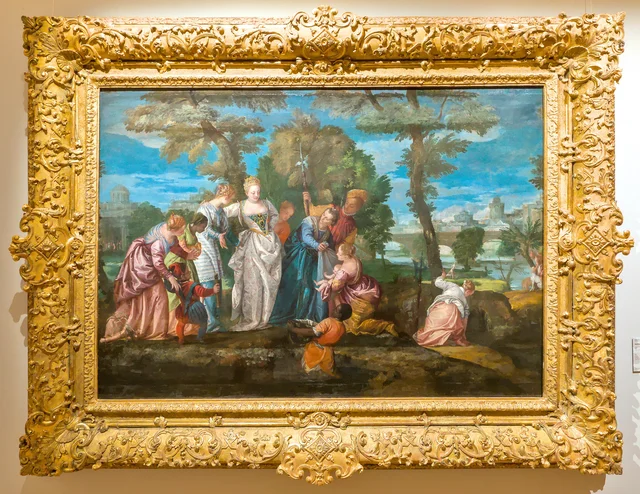 The Finding of MosesPaolo Veronese, 1580
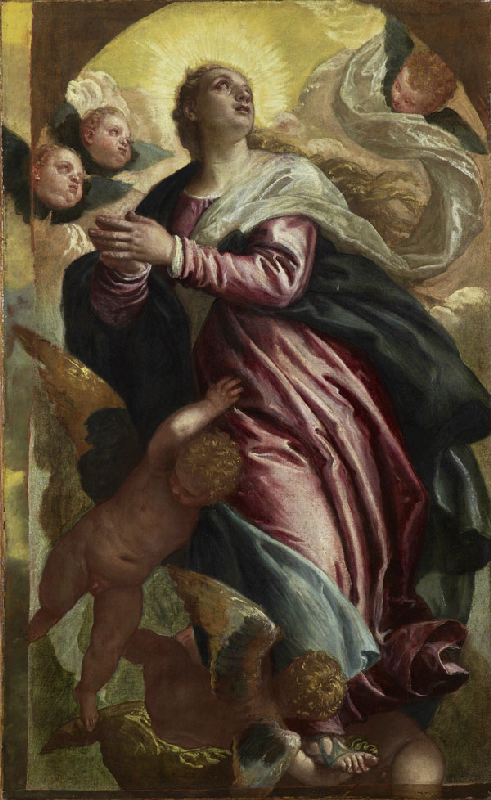 Assumption of the VirginPaolo Veronese, 1580
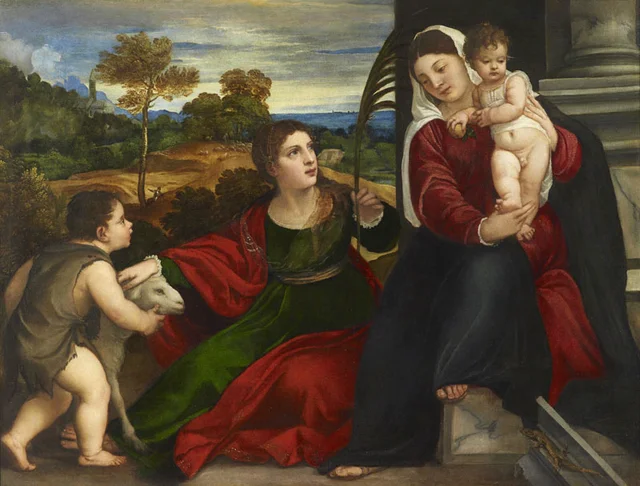 Madonna and Child with Saint Agnes and Saint John the BaptistTitian, 1535
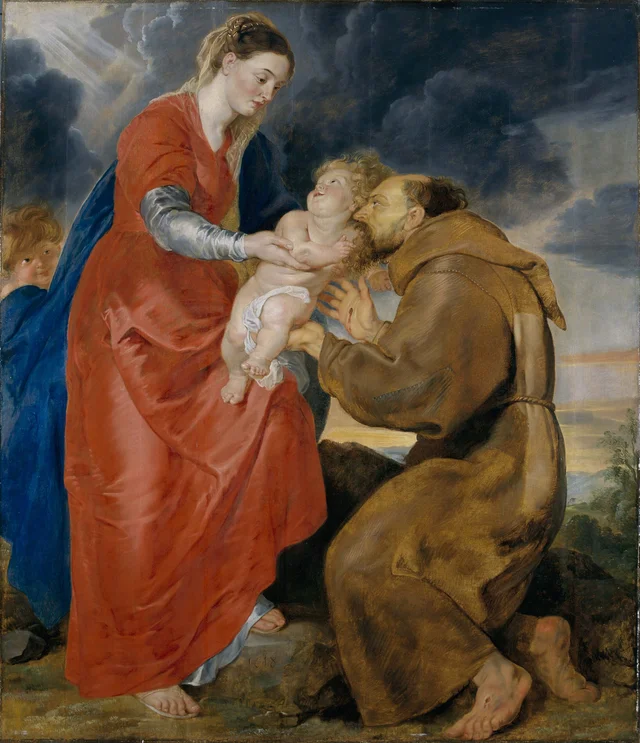 Saint Francis receiving the infant ChristPeter Paul Rubens, 1618
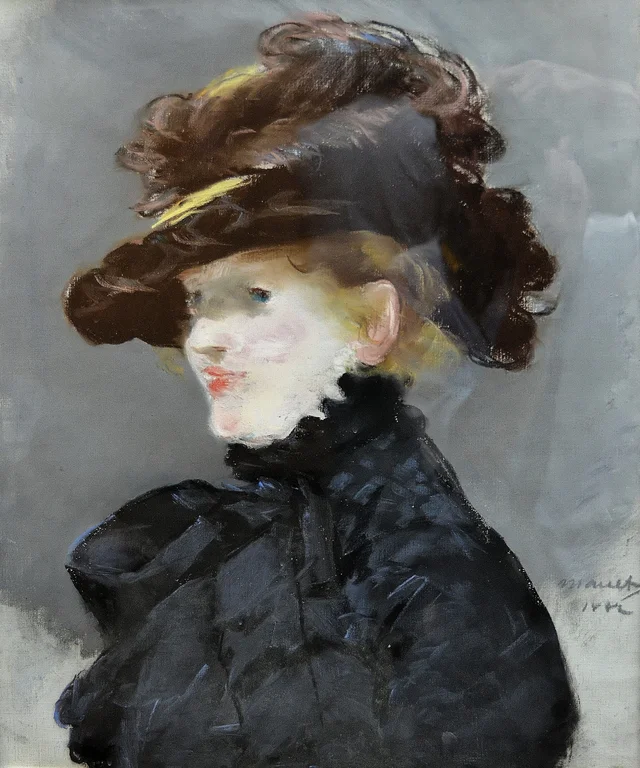 Méry Laurent in a Black HatÉdouard Manet, 1882
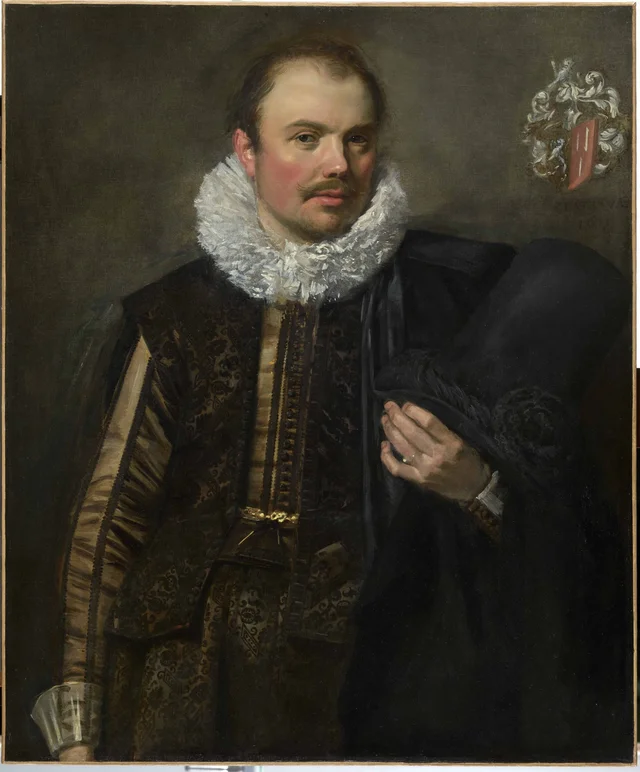 Portrait of a gentlemanFrans Hals, 1619