The story
The drawings at the heart of this museum are done in red chalk. They are by Hubert Robert, the French painter who lived in Rome for 11 years from 1754 and spent the rest of his career turning ruins, fountains and overgrown gardens into scenes. An amateur collector, Julien-Victor Veyrenc, gave the set to Valence in 1836, and the museum, founded in 1850, has kept adding to it, with canvases such as a large landscape of a waterfall with the shepherds of Arcadia. Its Hubert Robert holdings are counted among the most important, alongside those of the Louvre and the Hermitage.
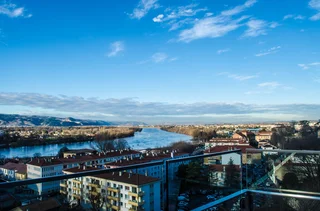
Since 1911 the museum has occupied the former bishop's palace beside Saint-Apollinaire cathedral, above the Rhône. A renovation by the Paris architect Jean-Paul Philippon reopened it in December 2013 as the Musée de Valence, art et archéologie, and the old palace still shows its layers, a 12th-century keep, painted ceilings from the 15th century, mullioned windows and a grand double staircase. The archaeology floors lead back in time to the prehistory of the middle Rhône valley, and then a glazed belvedere opens a full view over the river, the town and the Vercors mountains.
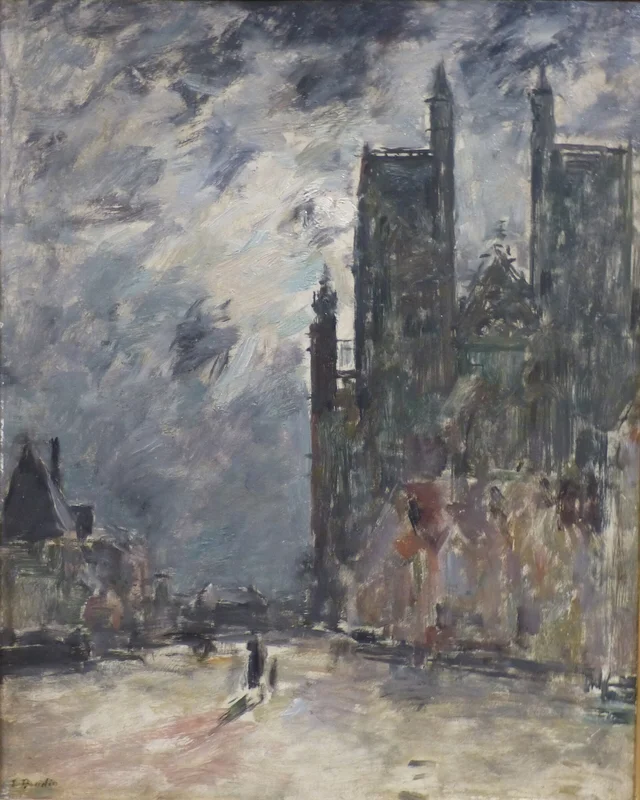
The fine arts floors give landscape the leading role, with Corot, Delacroix and the Romantic landscape painter Paul Huet among the 19th-century names, and they carry on into contemporary art with Olivier Debré and Sophie Calle.