The story
One of the rooms keeps a plain wooden box with an inscription by a Franciscan friar, Antonio Santi, dated 18 October 1677. It held Dante's bones. The poet died in Ravenna in September 1321, exiled from Florence since 1302, and was buried beside the friars' church by the man who had taken him in, Guido Novello da Polenta, lord of the city. Florence kept asking for him back. In 1519 Pope Leo X, a Medici, granted the request, and the friars opened the wall behind the sarcophagus and removed the remains before the Florentine party arrived. The bones stayed out of sight, in Santi's box, until a workman found them walled up next to the tomb in May 1865.
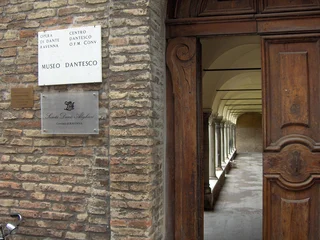
The museum sits in those same Franciscan cloisters, a few steps from the tomb itself, the small domed building Camillo Morigia put up in the 1780s. It opened in 1921 as the Museo Dantesco, on the initiative of Corrado Ricci, a Ravenna art historian, and was rebuilt room by room for the 700th anniversary of the poet's death in 2021. Eight rooms now run through Dante's life, the Commedia and what later ages made of it, and they hold the 1677 box together with the case in which the skeleton was laid out for viewing in 1865.
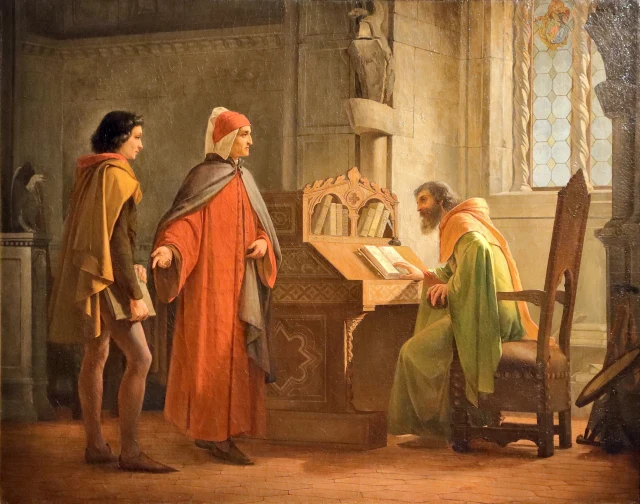
The first room was installed with the Gallerie degli Uffizi, which sent 19th-century Florentine paintings of Dante here on long-term deposit. The lamp inside the tomb next door burns olive oil that Florence sends to Ravenna every September, on the anniversary of the death.