The story
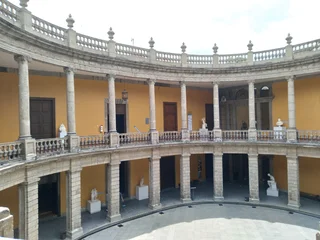
The Count of Buenavista never lived in the palace built for him. His mother, María Josefa Pinillos, Marquesa de Selva Nevada, commissioned it as a gift, and it was finished in Mexico City in 1805, very probably to designs by Manuel Tolsá, the Valencian architect and sculptor who also cast the bronze equestrian statue of King Charles IV that still stands in the city.
Since 1968 the palace has housed the Museo Nacional de San Carlos, and its paintings have an older story than the building's museum life. They began as the teaching collection of the Royal Academy of San Carlos, founded in New Spain in 1781 as the first official art academy in the Americas. Students learned by copying European pictures, and over the 19th and early 20th centuries the academy added works from closed convents, paintings by its own professors, copies made on study trips to Europe and gifts from private collectors.
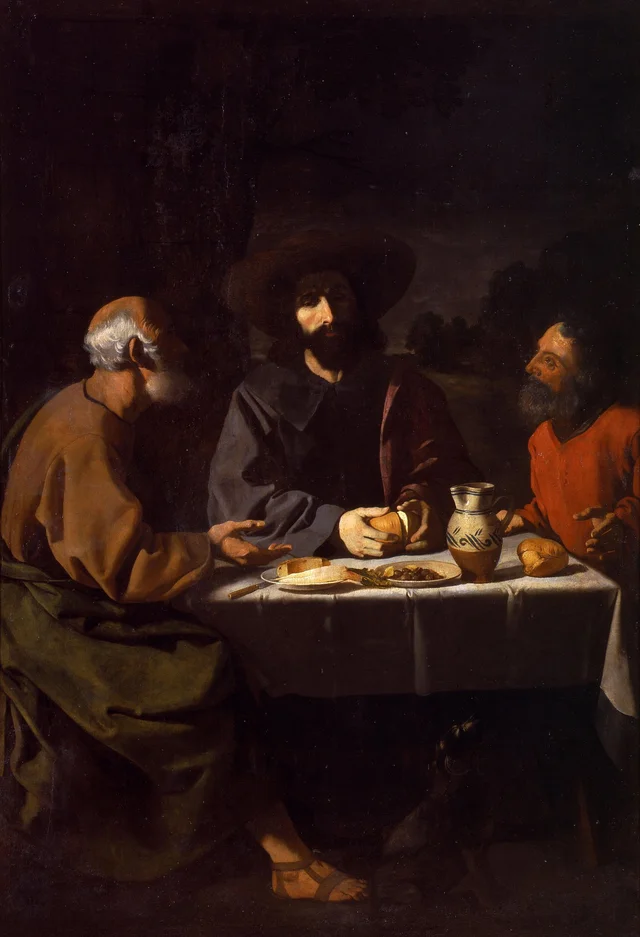
What a visitor walks through today is what the museum calls the oldest and most important collection of European art in Latin America. It runs from Gothic altarpieces of the 14th and 15th centuries through the Renaissance, the Baroque and Neoclassicism to the early 20th century. Spanish painting is a strong thread, and one of its anchors is the Supper at Emmaus by Francisco de Zurbarán, the Seville painter of monks and still lifes, signed and dated 1639, showing the two disciples recognising the risen Christ at table.