The story
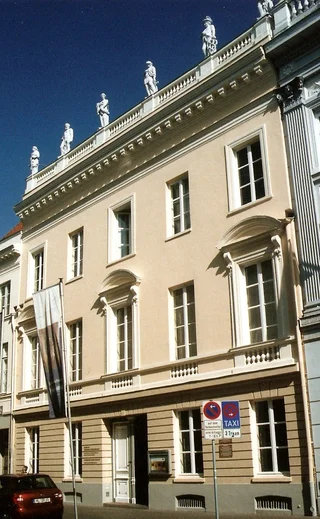
Step in from Königstraße, the main street of Lübeck's old town, and the Behnhaus still opens like a merchant's home. In the early 1800s Joseph Christian Lillie, a decorator to the Danish court, redesigned its rooms in a cool classical style for Peter Hinrich Tesdorpf, a Lübeck mayor, and from 1823 the house belonged to the Behn family for almost a century.
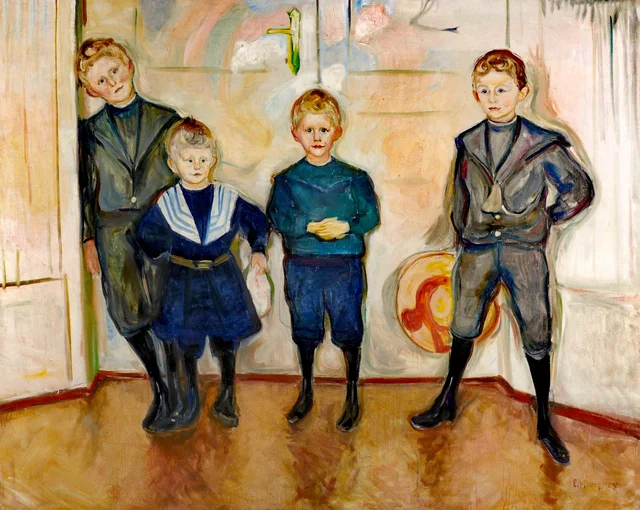
In 1921 a group of Lübeck citizens bought it and gave it to the city as a home for modern art. The director Carl Georg Heise collected boldly through the 1920s, and one of his purchases is still the picture the museum is best known for, Edvard Munch's 1903 portrait of the four sons of Dr. Max Linde. Linde was a Lübeck eye doctor and one of Munch's most devoted patrons. Nearby hang Max Liebermann's portrait of Linde himself and Munch's view of Travemünde, the town's seaside resort. That boldness had a price in 1937 and 1938, when between 210 and 255 works were confiscated as "degenerate art".
The neighbouring Drägerhaus joined the museum in 1981 with money from the Dräger foundation, and keeps a suite of rococo banqueting rooms on its ground floor. Across the two houses hang paintings by Friedrich Overbeck, the Lübeck-born leader of the Nazarene painters, alongside Caspar David Friedrich and Ernst Ludwig Kirchner. After a three-year renovation the museum reopened in November 2025 with a new display of 90 selected works.