The story
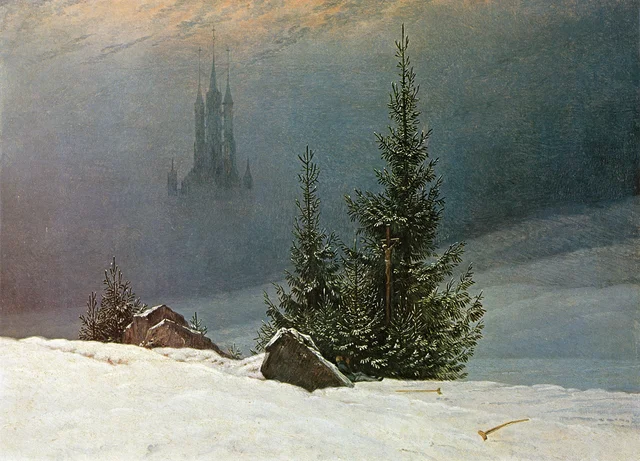
In 1942 Dortmund's city museum bought a winter landscape by Caspar David Friedrich, the German Romantic painter, from a Dresden dealer. It shows a church rising behind snowy fir trees, and it had been thought lost. Then in 1987 the National Gallery in London bought another version of the same picture, and the Berlin Friedrich specialist Helmut Börsch-Supan declared the Dortmund picture not genuine. The museum answered that Friedrich often painted a subject more than once, and sent the picture for X-ray and infrared examination. Specialists have never fully agreed on whose hand painted it.
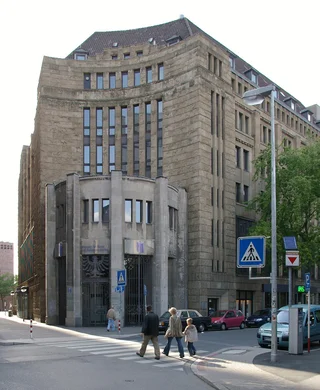
The museum itself dates from 1883 and settled in 1983 in a former savings bank on the Hansastraße, built in 1924 by the architect Hugo Steinbach in the sober New Objectivity style. Its earlier building was destroyed in the Second World War, and for years the collection was kept at Cappenberg Castle outside the city.
Its rooms walk through Dortmund's history in order, from the Stone Age to the modern city. One highlight is the Dortmund gold hoard, 444 Roman gold coins and three gold neck rings found by workmen on the Ritterstraße in 1907 and buried after 407. Further on come Westphalian furniture from Gothic to Art Nouveau, a Holy Kinship altarpiece given in 2008, by Jan Baegert, a painter active in Wesel around 1500, and a collection of old surveying instruments.