The story
In 1948 the painter Władysław Strzemiński designed a room for this museum in which the walls themselves were divided into fields of colour, built to frame paintings by the Dutch De Stijl circle and sculptures by his wife, Katarzyna Kobro. Two years later the communist authorities, who wanted socialist realism, had it destroyed. Strzemiński's student Bolesław Utkin rebuilt it in 1960, and the Neoplastic Room is still the heart of the collection.
That collection was started by artists. Around 1929 Strzemiński, Kobro, the painter Henryk Stażewski and two poets, Julian Przyboś and Jan Brzękowski, working together as the a.r. group, began asking fellow avant-gardists across Europe for works. What they gathered went on show in Łódź on 15 February 1931, which makes this one of the earliest museums of modern art anywhere, with pieces given by Theo van Doesburg, Hans Arp and others.
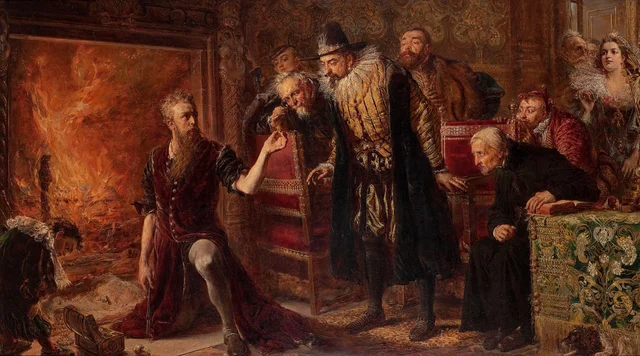
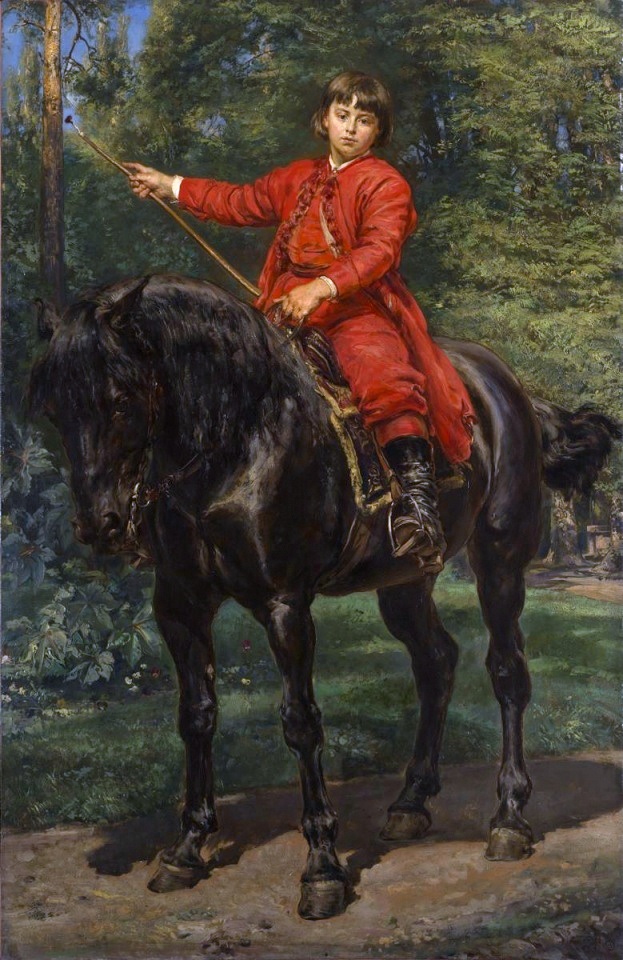
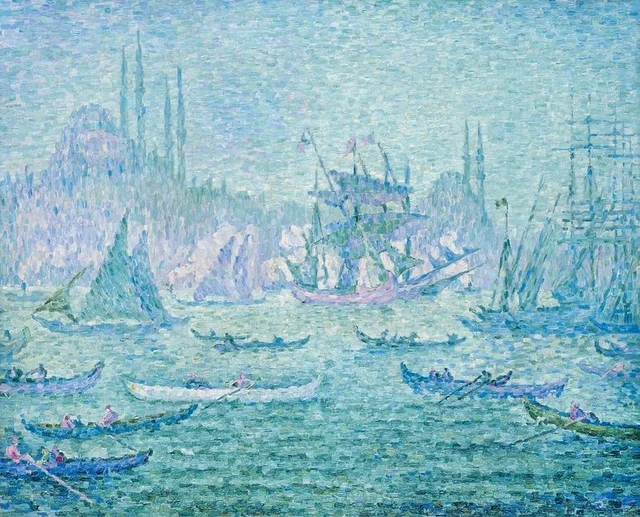
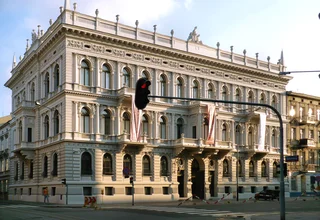
Today the museum is spread over three buildings, ms1 in a textile magnate's palace, ms2 in a converted factory, and the Herbst Palace, a mill owner's home. The older holdings show what else the city collected. Jan Matejko, Poland's great history painter, is here with Alchemist Sendivogius of 1867, a court alchemist demonstrating his art before King Sigismund III, given to the city in 1938. There is also a view of the Golden Horn by Paul Signac, painted after his six weeks in Constantinople in 1907.