The story
In 1965 the museum in Słupsk, a town near Poland's Baltic coast, bought 110 pastel portraits from Michał Białynicki-Birula. His father, a doctor in the mountain resort of Zakopane, had been a close friend of Stanisław Ignacy Witkiewicz, the painter, playwright and philosopher known as Witkacy. That purchase became the core of what the Museum of Middle Pomerania describes as the world's largest Witkacy collection, now more than 250 works.
Most of them come from his Portrait Firm, the business he ran from 1925 to 1939, with a printed set of rules for clients and several types of portrait at different prices. On many sheets he added abbreviations noting the stimulants he had or had not taken while drawing. The portraits hang in the White Granary, a restored granary in the museum's complex that opened to visitors in 2019, and the selection on show changes every few months.
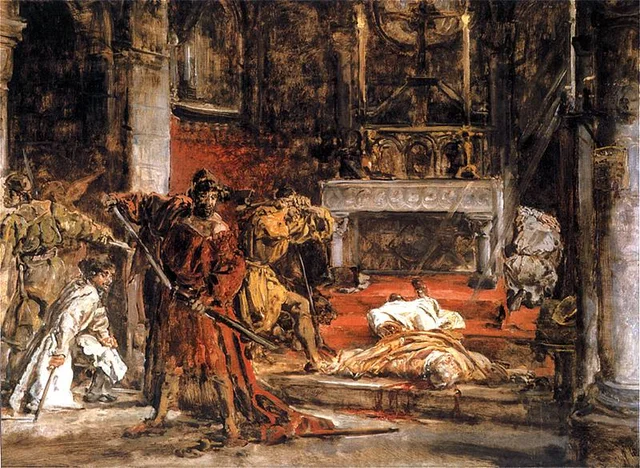
The museum's main seat is the Castle of the Pomeranian Dukes, built in the early 16th century and rebuilt in Renaissance style in the 1580s, a residence of the Griffin dynasty until the mid-17th century. Inside are treasures of the last Griffin dukes, Gothic sculpture and Renaissance tapestries. The collection also holds a late painting by Jan Matejko, Poland's best-known history painter, The Murder of Saint Stanislaus, made in 1892, the year before his death.