The story
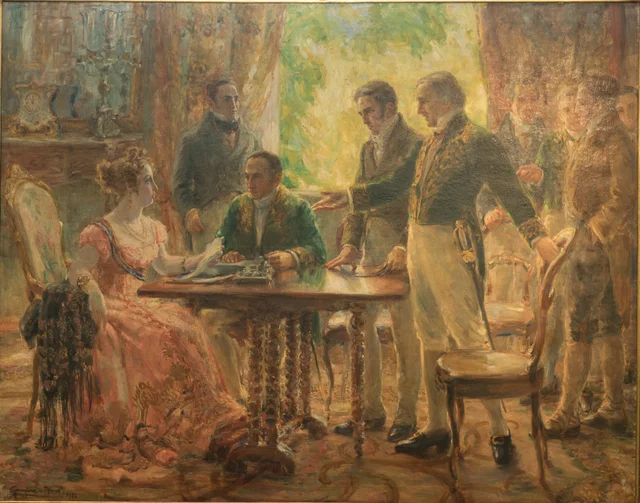
In a painting made for Brazil's centenary in 1922, the person deciding the country's future is a woman. Georgina de Albuquerque's Session of the Council of State shows Princess Leopoldina, the Austrian-born wife of the future emperor Pedro I, presiding over the meeting of 2 September 1822 that urged a break with Portugal, while Pedro himself was away in São Paulo. History painting was then a man's genre, and the canvas is often cited as the first by a Brazilian woman to win an official prize.
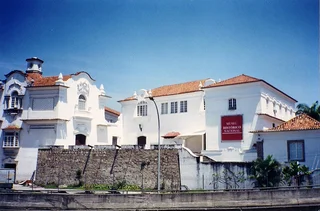
It belongs to the Museu Histórico Nacional, created by presidential decree in that same centenary year under President Epitácio Pessoa. Its first director, the writer Gustavo Barroso, set it up in a cluster of old military buildings near the waterfront of central Rio. The oldest is the Fort of Saint James of Mercy, begun in 1603, joined by the Casa do Trem, an artillery depot of 1762, and the War Arsenal of 1764.
The museum keeps some 172,000 objects. Among them are a carriage used by the emperors Pedro I and Pedro II and the golden pen with which Princess Isabel, Pedro II's daughter, signed the 1888 law that abolished slavery in Brazil. Its coins, medals and decorations, more than 150,000 pieces, are counted among the most important such collections in South America.