The story
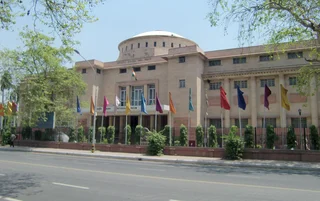
India's National Museum began with an exhibition in London. In the winter of 1947 to 1948 the Royal Academy showed a great survey of Indian art at Burlington House, and when the loans came home, the museums and collectors who had lent them were asked to give them to a future national collection. The museum opened on 15 August 1949, the second anniversary of independence, in the state rooms of Rashtrapati Bhavan, the former viceroy's residence. In 1960 it moved to its own building on Janpath, designed by the architect Ganesh Bikaji Deolalikar.
Today it holds around 200,000 objects spanning some five thousand years. Visitors come for the small bronze Dancing Girl from Mohenjo-daro, made in the Indus Valley more than four thousand years ago, and for relics associated with the Buddha found at Piprahwa, near the border with Nepal.
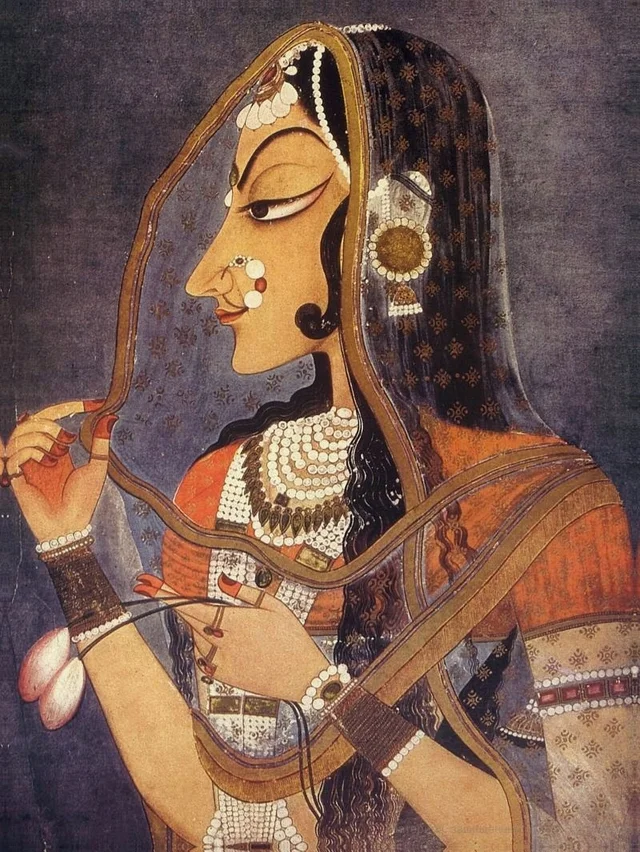
More than 17,000 of the objects are miniature paintings. One of the best known shows Bani Thani, a singer and poet at the court of Kishangarh, a small Rajput kingdom in Rajasthan. Around 1750 the court painter Nihal Chand portrayed her as Radha, the beloved of Krishna, with arched eyebrows, long lotus-shaped eyes and a pointed chin. Her companion, Raja Sawant Singh, wrote devotional verse under the name Nagari Das. That face became the ideal of beauty for later Kishangarh painting, and in 1973 India put it on a postage stamp.