The story
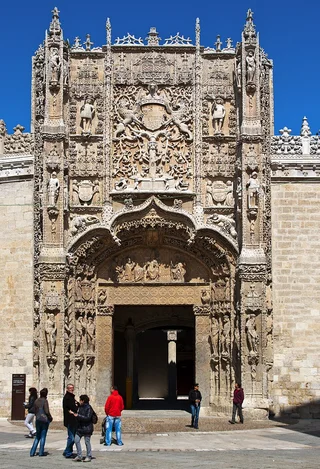
Most of what fills the National Museum of Sculpture came out of churches and monasteries. In 1836 the Spanish state, under the finance minister Juan Álvarez Mendizábal, seized the property of the religious orders, and altarpieces and processional figures from the convents of Castile were gathered in Valladolid. A museum founded in 1842 to hold them moved in 1933 into the Colegio de San Gregorio, a college built for Dominican friars at the end of the 15th century.
The building is part of the visit. Its entrance façade, attributed to the sculptor Gil de Siloé, is carved like a stone altarpiece, a thicket of branches, coats of arms and hairy wild men. Inside, the collection is mostly painted wooden sculpture from the 13th to the 19th centuries. The Entombment by Juan de Juni, a French-born sculptor, sets life-size mourners around the dead Christ, and the figures of Gregorio Fernández, the leading Valladolid sculptor of the early 1600s, were made to be carried through the streets in Holy Week.
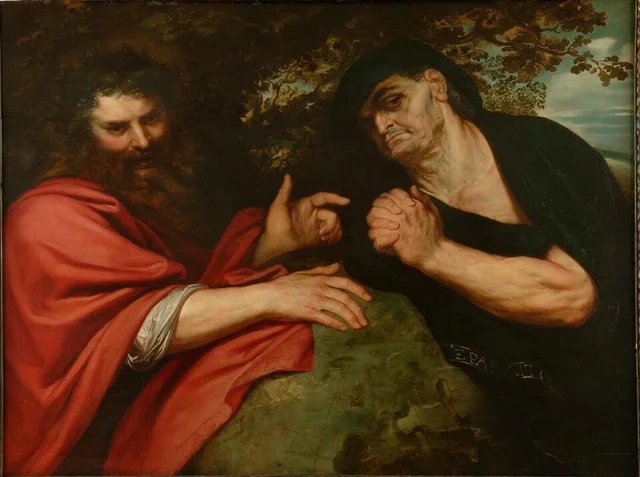
Painting has a smaller place, with one famous exception. In 1603 the young Rubens came to the Spanish court, then based in Valladolid, as an envoy of the Duke of Mantua. Some of the pictures he brought as gifts were damaged on the journey, and he painted new ones on the spot. His Heraclitus and Democritus, the weeping and the laughing philosophers, comes from that visit and is still in the city.