Neues Palais
Potsdam, Germany
The story
In 1763 Prussia came out of the Seven Years' War exhausted, and Frederick the Great answered by building. At the western end of Sanssouci park in Potsdam he raised the Neues Palais, some 200 rooms under a tall central dome, finished in 1769. Frederick called it a fanfaronade, a piece of bragging meant to show off Prussia's strength after the war. He hardly ever lived in it. It was a palace for guests and for display.
About 60 of those rooms are open today. The strangest is the Grotto Hall on the ground floor, its walls set with more than 24,000 shells, fossils and minerals above a marble floor of sea creatures. Upstairs, the Upper Gallery was closed for more than 30 years until it reopened in July 2025 with the paintings Frederick had set into its wall panelling in 1768.
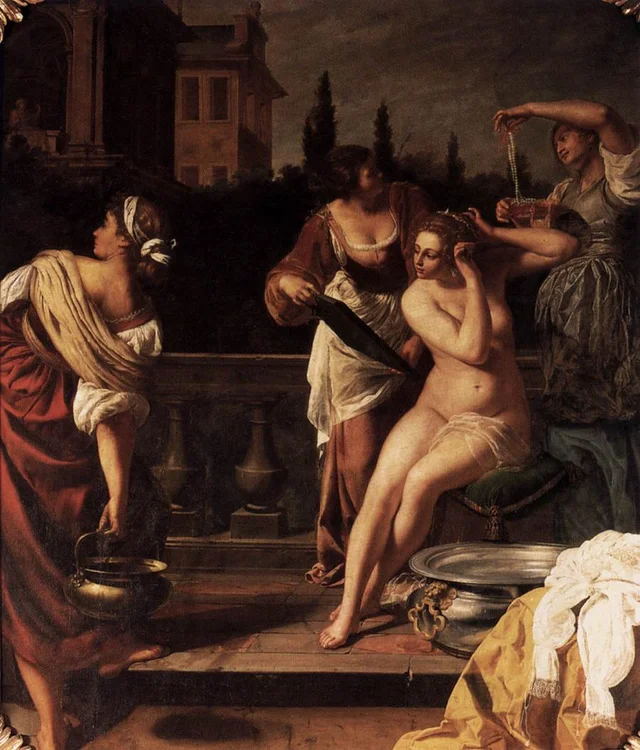
Two of those canvases were recognised only in the 20th century as the work of Artemisia Gentileschi, the Roman-born Baroque painter. Bathsheba at Her Bath and Tarquin and Lucretia had once belonged to the Farnese family's collection, and the king most likely bought them without knowing that a woman had painted them. They hang beside Baroque pictures by Guido Reni of Bologna and Luca Giordano of Naples, all restored together with their original frames over six years.