The story
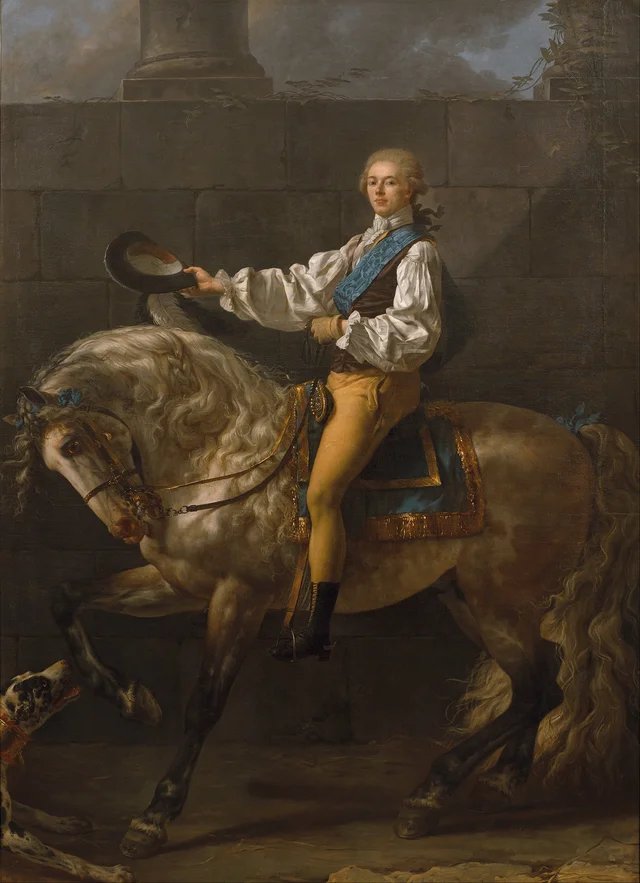
In 1781 Jacques-Louis David, the French painter just back from Rome, showed Paris a life-size portrait of a young Polish nobleman reining in a rearing horse. The sitter was Stanisław Kostka Potocki, twenty-six, a collector and keen amateur architect. The canvas, more than three metres tall, is now the best-known picture in the palace he would one day own, and it is counted among the most valuable paintings in any Polish museum.
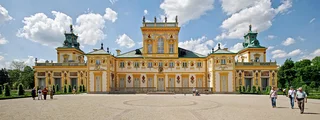
The palace itself was built from 1677 as the summer residence of King Jan III Sobieski, the Polish king remembered for relieving Vienna from the Ottoman siege of 1683. His architect, Augustyn Locci, blended an Italian villa with a Polish country manor, and sculpture and reliefs on the façades celebrate the king's victories. After Sobieski the house passed through great families, among them Elżbieta Sieniawska and Izabela Lubomirska, before Potocki took it over in 1799. In 1805 he opened part of it to visitors, with paintings and Sobieski memorabilia, making it one of the earliest public museums in Poland.
During the Second World War German forces damaged the palace and took much of its collection. It escaped the destruction that followed the 1944 Warsaw Uprising, most of the removed works were recovered, and the museum reopened in 1962. Today the route leads through the king's and queen's apartments, under seventeenth-century painted ceilings, to the baroque garden that runs down toward the lake.