The story
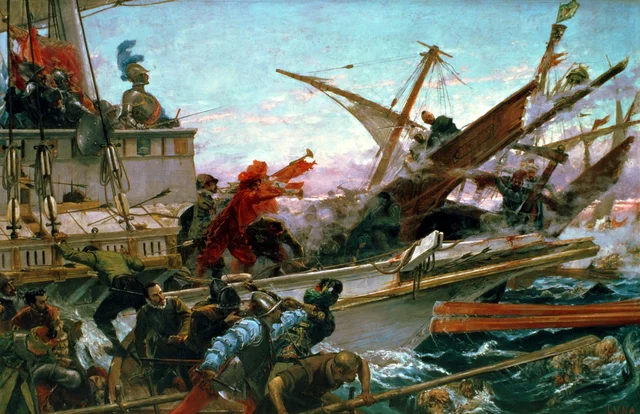
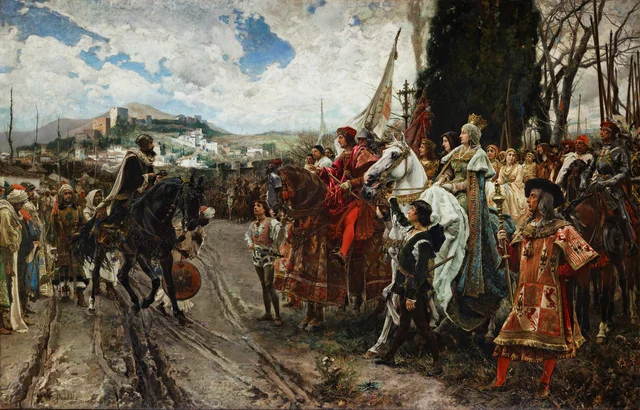
Walk into the Salón de Pasos Perdidos of Spain's Senate, the hall where senators talk between sessions, and two huge canvases face you, each about five and a half metres wide. One shows Boabdil, the last Muslim ruler of Granada, handing the keys of his city to Ferdinand and Isabella on 2 January 1492. The other is a crush of galleys and smoke, the naval Battle of Lepanto of 1571.
The building is a working parliament, the seat of the upper house, and both pictures were commissioned by the Senate itself. Francisco Pradilla, an Aragonese painter fresh from the success of his Joanna the Mad, finished The Surrender of Granada in 1882 and was paid double the agreed fee. Lepanto went to Juan Luna, a painter from the Philippines, then a Spanish colony, who had won a gold medal in Madrid in 1884 for his Spoliarium. King Alfonso XII wanted the two canvases to hang as a pair, and the Queen Regent, Maria Christina, unveiled Luna's in 1887.
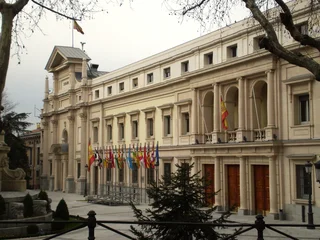
The palace began as a college of Augustinian friars founded in 1581 by Doña María de Aragón, a lady-in-waiting at the royal court. El Greco painted the main altarpiece for its church, and most of those canvases are now in the Prado. Spain's parliament first sat here in 1814, and free guided tours lead visitors through the old session chamber, the library and the hall with the two paintings.