The story
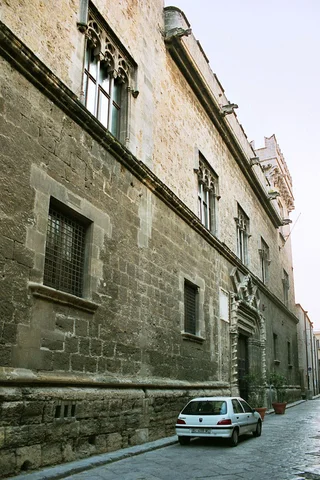
On the night of 16 April 1943, Allied bombs brought down the loggia, the portico and part of a tower of Palazzo Abatellis, in the old Kalsa quarter of Palermo. The palace had been built at the end of the 1400s by Matteo Carnilivari, a Sicilian master builder, for Francesco Abatellis, master of the port of the Kingdom of Sicily, in the island's late-Gothic Catalan style. After his death it became a convent of Dominican nuns.
Once the damage was repaired, the Venetian architect Carlo Scarpa arranged the regional gallery of Sicily inside it in 1953 and 1954. He set sculptures on stands and paintings on screens and easels, placed with great care against the old stone, and his installation is still studied as one of the landmarks of postwar museum design.
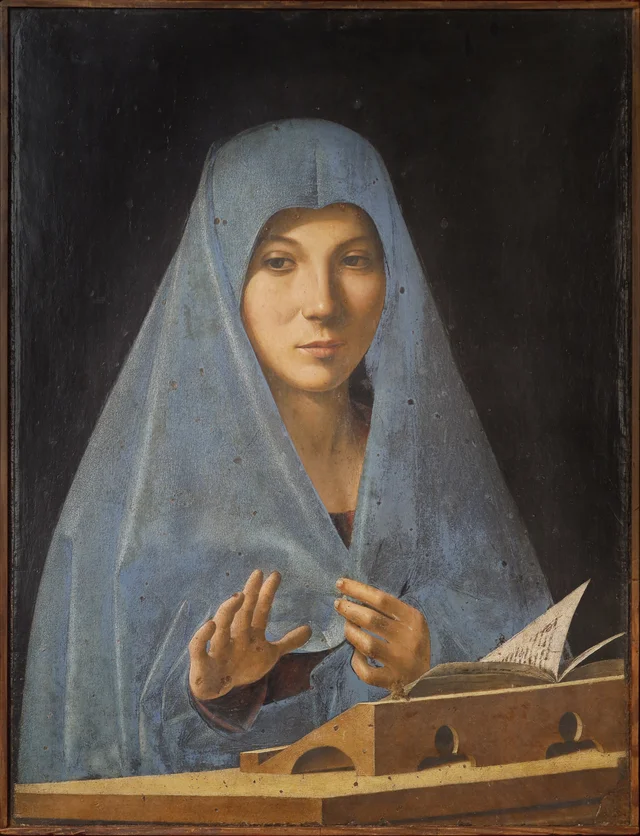
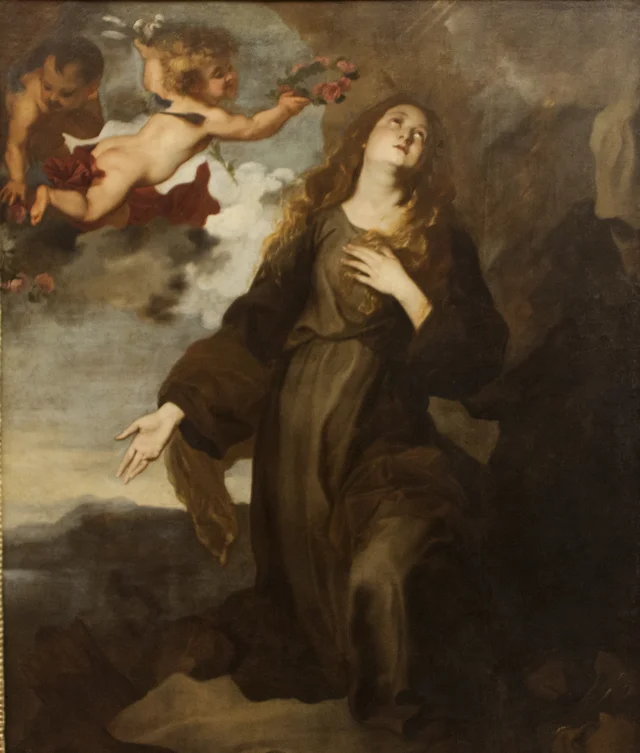
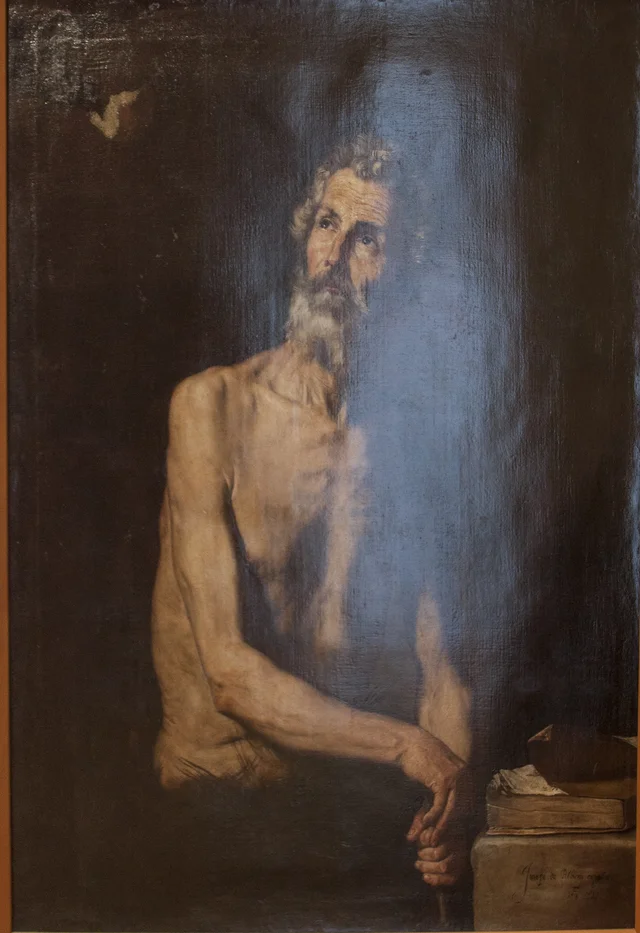
The collection is Sicilian painting and sculpture from the Middle Ages to the 1700s. Its most famous painting is Antonello da Messina's Virgin Annunciate from about 1476, a small panel in which Mary looks up from her book and raises one hand toward an angel we never see. Anthony van Dyck's Saint Rosalia crowned by angels comes from a later century. The Flemish painter was in Palermo in 1624, the year the remains of Rosalia, the city's patron saint, were found during an outbreak of plague, and he painted her several times.