Palazzo Bellomo Museum
Syracuse, Italy
The story
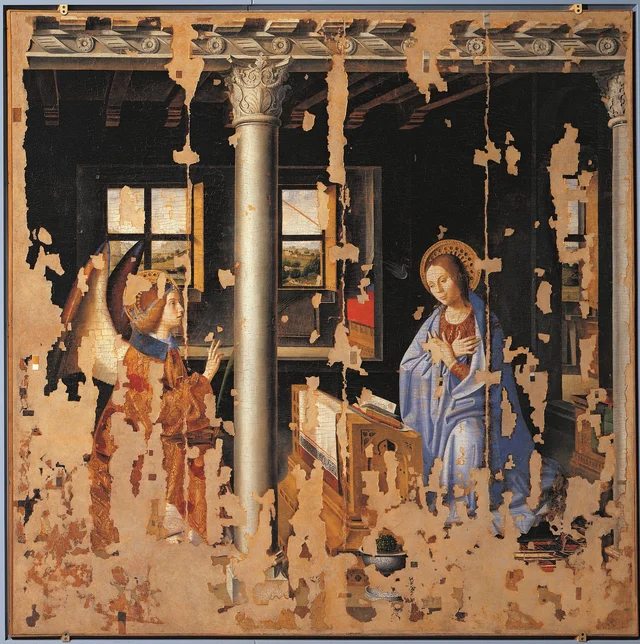
In 1474 Antonello da Messina, the Sicilian painter who brought Flemish oil technique south, agreed to paint a large Annunciation on panel for the church of the Annunziata in Palazzolo Acreide, a hill town inland from Syracuse. It stayed there for more than four centuries. Early in the 1900s, already in poor condition, it was brought to Syracuse, and its paint was later transferred from the decaying wood onto canvas. Worn as it is, this is the picture most visitors come here for, last restored in 2007 and 2008 by the national conservation institute in Rome.
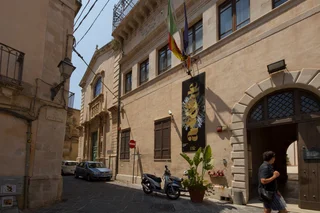
The palace around it is older still. Its ground floor, with a pointed Gothic doorway, goes back to the thirteenth century, when the Swabian Hohenstaufen dynasty ruled Sicily, and the upper floor was added in the fifteenth century in the Catalan Gothic style. The Bellomo family bought it in 1365, and in 1722 Benedictine nuns from the neighbouring convent of San Benedetto acquired it. It passed to the state's fine-arts service in 1901 and became a museum in 1948, taking the medieval and later collections out of the city's archaeological museum.
The rooms, on Ortigia, the island that holds the old town of Syracuse, follow Sicilian art from the Middle Ages to the eighteenth century. There is marble sculpture by Francesco Laurana and the Gagini family, there are canvases by Mario Minniti, the Syracusan painter who had posed for Caravaggio in Rome, and there are the carved tombs of Giovanni Cabastida and Giovanni Cardenas, governors of the Camera Reginale, the lands set aside for Sicily's queens.