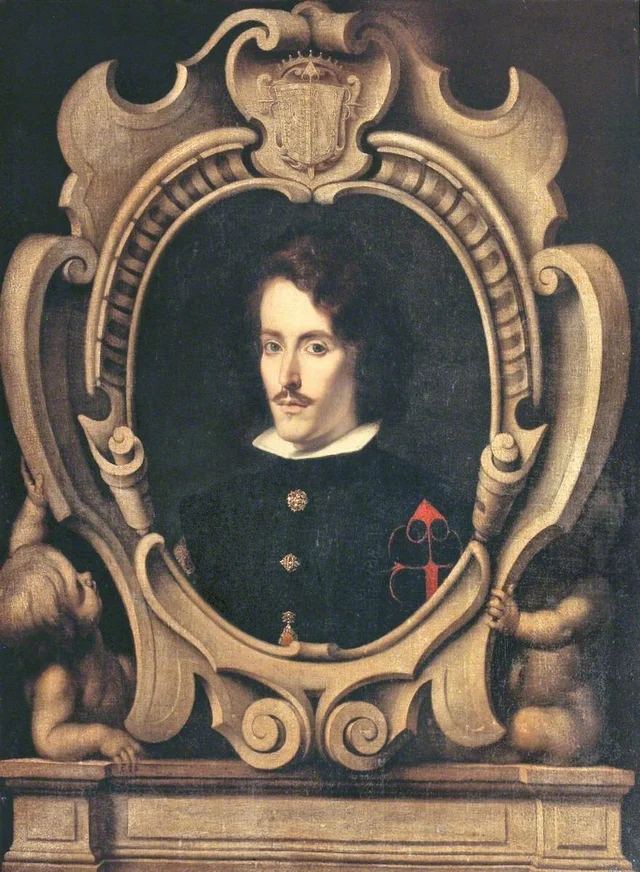
Penrhyn Castle
Bangor, United Kingdom
The story
For more than a century a portrait of a Spanish nobleman hung at Penrhyn Castle as a mere copy. In 2017 the Spanish art historian Benito Navarrete Prieto identified it as the original by Bartolomé Esteban Murillo, the Seville painter, made around 1653 and showing the historian Diego Ortiz de Zúñiga. It had been bought in the 1870s as a Murillo, then demoted by 1901, partly because darkened varnish hid the quality of the paint.
Penrhyn is primarily a house, and a startling one. Near Bangor in north Wales, the architect Thomas Hopper built it between about 1820 and 1837 as a neo-Norman castle, carved inside with beasts, faces and interlaced patterns. The money came from the family's slate quarries nearby and from sugar plantations in Jamaica worked by enslaved people, a history the National Trust now addresses at the castle. Slate turns up everywhere, down to a bed made of it that weighs more than a ton.
The pictures were almost all gathered by Edward Gordon Douglas-Pennant, the first Lord Penrhyn, with the help of a Belgian dealer. Dutch, Venetian and Spanish paintings still hang in the rooms he furnished, among them Canaletto's view of the Thames at Westminster. The family gave the castle to the National Trust in 1951, and in 2017 the Welsh Government accepted 34 of its paintings for the nation, with the promise that they would stay on display here.