The story
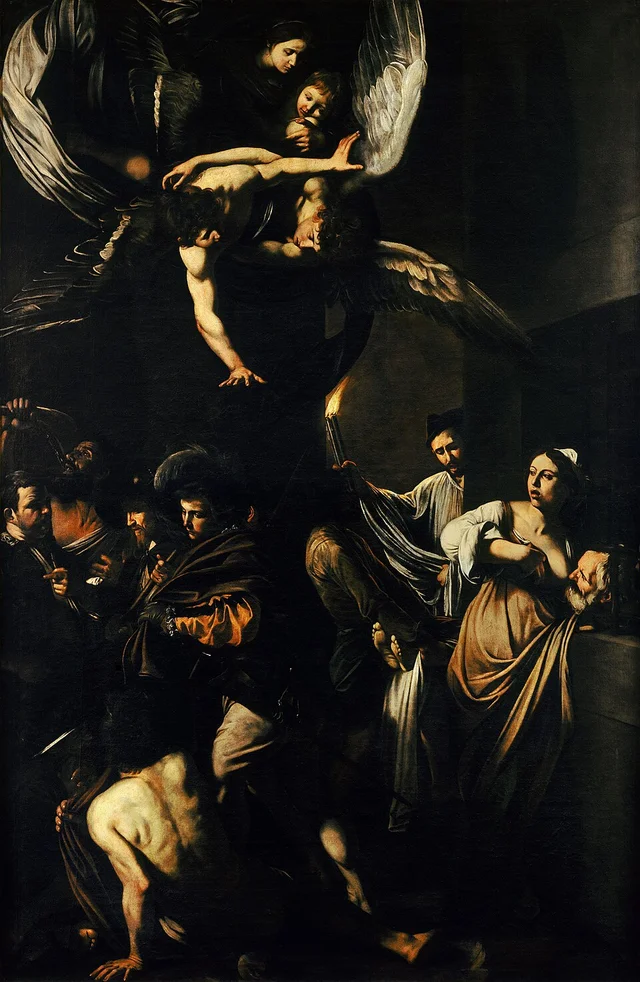
Above the high altar of a small octagonal church on Via dei Tribunali, in the old centre of Naples, hangs the painting that was made for it. Caravaggio reached the city in October 1606, on the run after killing a man in Rome, and within months he delivered The Seven Works of Mercy to a young charitable brotherhood, the Pio Monte della Misericordia. Seven Neapolitan noblemen had founded it in 1601 to care for the sick at the city's Hospital of the Incurables, and the seven acts of mercy were its whole programme.
Caravaggio packed all seven into one dark street corner. A woman gives her breast to an old prisoner through the bars, the classical story known as Roman Charity. Saint Martin cuts his cloak for a naked beggar. Samson drinks from a donkey's jawbone, a corpse is carried away by torchlight, and above the crowd the Madonna and Child lean down with two angels. The governors valued it so highly that in 1613 they ruled it must never be sold or moved.
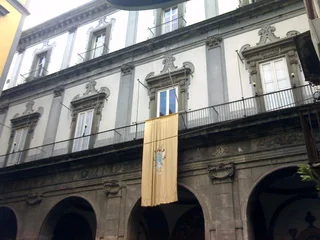
The church around it was rebuilt between 1658 and 1678 by the architect Francesco Antonio Picchiatti. Its side chapels hold altarpieces by Neapolitan painters who learned from Caravaggio, among them Battistello Caracciolo and Carlo Sellitto, along with works by Luca Giordano. Upstairs, in the rooms of the 17th-century palace, the institution keeps its picture gallery, and the Pio Monte still works as a charity today.