Pistoia Cathedral
Pistoia, Italy
The story
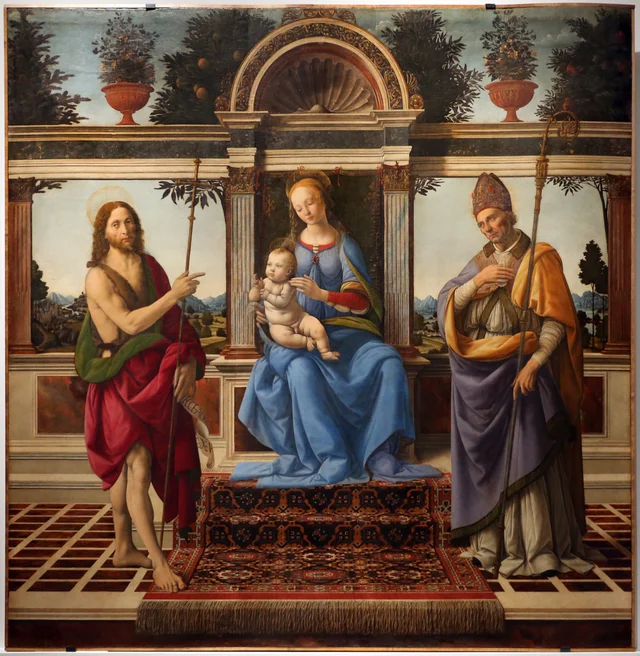
In 1474 the Florentine sculptor and painter Andrea del Verrocchio, the master in whose workshop Leonardo trained, was commissioned to paint an altarpiece in memory of Donato de' Medici, Pistoia's bishop for nearly 40 years. It shows the Madonna enthroned between John the Baptist, patron of Florence, and Saint Donatus, the bishop's namesake. The panel, known as the Madonna di Piazza, took until about 1486 to finish, and cleaning has shown that it was painted almost entirely by Verrocchio's pupil and heir, Lorenzo di Credi.
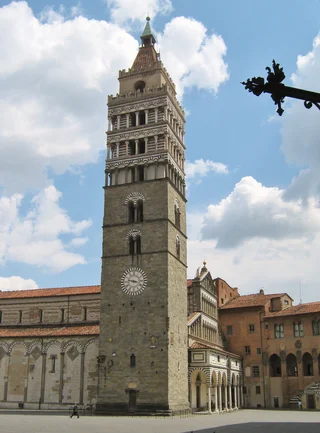
The building that holds it is primarily a working church, the cathedral of Pistoia, dedicated to Saint Zeno, but it is also home to some of the town's finest art. Verrocchio left a second commission here, the monument to Cardinal Niccolò Forteguerri. It was ordered in 1473 and was still unfinished when Verrocchio died in 1488, and its figure of Charity was carved later by the sculptor Lorenzo Lotti. Over the main door, Andrea della Robbia set a glazed terracotta lunette of the Madonna and Child with angels around 1505.
The cathedral's oldest treasure is the silver altar of Saint James, the city's patron saint, in the Crucifix Chapel. Goldsmiths worked on it from 1287 well into the 15th century, and in 1401 the young Filippo Brunelleschi, later the architect of Florence's great dome, added two busts of prophets.