The story
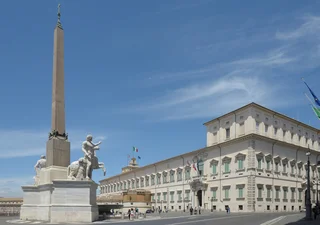
On the night of 5 to 6 July 1809, French soldiers scaled the walls of the Quirinal Palace in Rome, forced their way to the papal apartments and arrested Pope Pius VII, who had just excommunicated Napoleon. The pope was taken out of Rome under guard and spent almost five years as a prisoner. The palace he left had been a papal residence since Gregory XIII began it in 1583, on the highest of Rome's seven hills, as a summer refuge from the low ground around the Vatican.
Ottaviano Mascarino, Domenico Fontana and Carlo Maderno all worked on it, and four conclaves met here in the 19th century. In 1870 the troops of the new Kingdom of Italy entered Rome, and the Savoy kings moved into the popes' palace. Since 1946 it has been the residence and office of the President of the Italian Republic, a building of about 1,200 rooms.
Visitors on booked tours see a good deal of what the popes left. On the grand staircase is Christ in Glory by Melozzo da Forlì, a fragment of the fresco he painted around 1480 for the apse of the church of Santi Apostoli, moved here in 1711. The chapel of the Annunciation was frescoed by Guido Reni, the Bolognese painter, for Pope Paul V. The great hall built for papal ceremonies is now named after the Corazzieri, the president's tall honour guard, who still stand duty there in plumed helmets.