The story
A highlight of the Residenzgalerie is also one of its smallest pictures. Rembrandt painted Old Woman Praying around 1629 or 1630, while he was still working in his home town of Leiden, on a copper plate not much larger than a postcard and laid with gold leaf. He used a gold ground only three times, and here it makes the light around the old woman glow out of the shadows. Since 1762 the picture has been called Rembrandt's Mother Praying, though it is a study of a character type, for which his mother was probably the model.
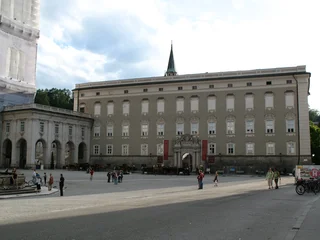
The gallery fills rooms of the Residenz, the palace of the prince-archbishops who ruled Salzburg until the early 19th century. Those rulers had their own picture collection, but it was largely lost in the wars with France after 1800. In 1923 Salzburg artists pushed for a new gallery, partly to give visitors to the young Salzburg Festival something more to see.
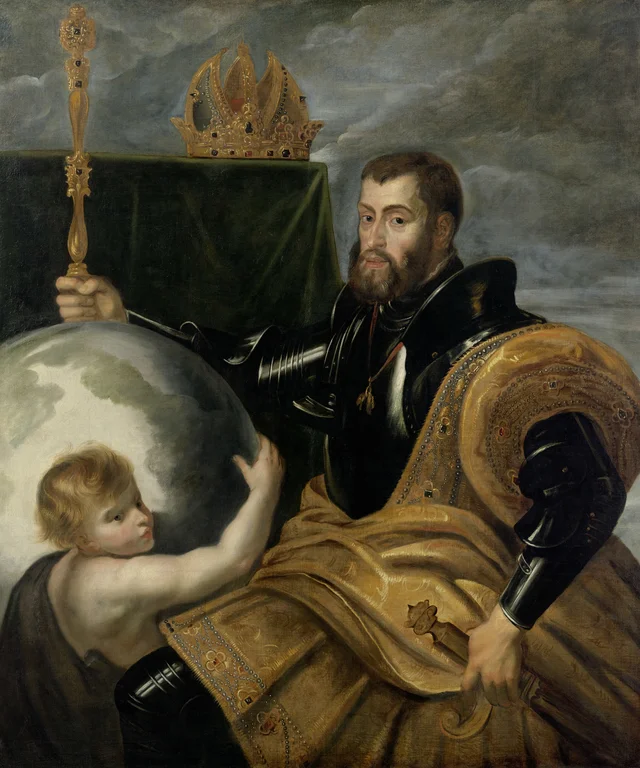
Its character comes from two aristocratic collections. Paintings gathered in the early 19th century by Count Johann Rudolf Czernin, a nobleman related to Salzburg's last prince-archbishop, came on loan in 1954 and were bought between 1980 and 1991. Dutch and Italian works of the 17th century from the Schönborn-Buchheim collection joined in 1956 on permanent loan. That is why Dutch and Flemish painting fills so many rooms, alongside pieces such as an allegory by the young Rubens of the emperor Charles V as ruler of vast realms.
Since 2014 the gallery has been part of the DomQuartier, a single route that leads from the archbishops' state rooms through the gallery and on to the cathedral and St Peter's Abbey.